Dalton Castle
Dalton Castle is a striking 14th‑century peel tower rising above the market town of Dalton‑in‑Furness, built by the monks of Furness Abbey to administer justice and protect their estates. Its thick sandstone walls and narrow windows reflect its defensive purpose, yet the building also served as a courthouse and prison. An interesting fact is that George Romney, the renowned 18th‑century portrait painter, was born in Dalton and is said to have sketched the castle in his youth, adding a cultural footnote to its long history. Inside, visitors can explore the restored courtroom, where medieval justice was once dispensed, complete with displays that explain the abbey’s authority over the region. The upper floors reveal the building’s defensive character, with stone stairways, vaulted ceilings, and small chambers that once housed prisoners. Exhibits showcase archaeological finds, local history, and the story of Furness Abbey’s influence. From the tower’s windows, views stretch across the town, offering a sense of how this compact fortress once dominated the landscape.
Dalton-in-Furness United Kingdom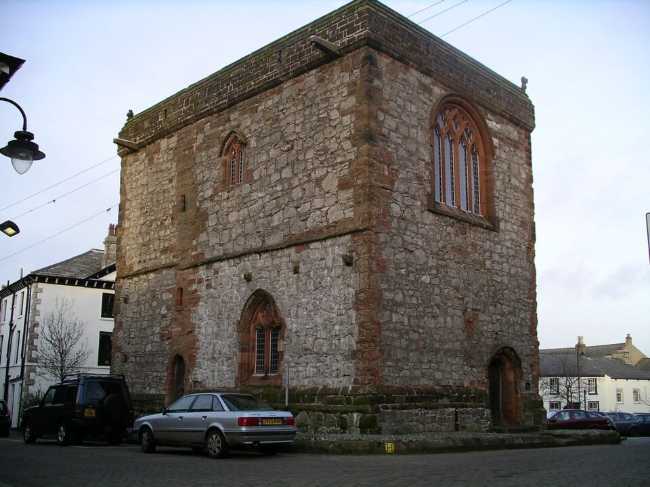
Dalton Castle is a 14th-century peel tower that stands above Market Place in the ancient market town of Dalton-in-Furness, Cumbria. Built between 1314 and 1360 by the monks of Furness Abbey, it protected the town and served as the administrative seat where the Abbot dispensed justice. The Grade I listed tower is owned by the National Trust and rises above the surrounding shops and pubs, its thick red sandstone walls a reminder of Dalton’s medieval importance as the capital of Furness. The castle opens free on Saturday afternoons in season, though the roof is no longer accessible. Market Place itself is worth exploring for its Victorian drinking fountain, cast-iron shop fronts, and the market cross with old fish-drying slabs. St Mary’s Church, a striking red sandstone building designed by Paley and Austin, sits nearby and holds the grave of George Romney. Dalton-in-Furness lies in a narrow valley just north-east of Barrow-in-Furness and is easily reached by rail or via the A590. From here you can visit Furness Abbey, the vast 12th-century Cistercian ruin that once owned the castle. The spectacular Sandscale Haws National Nature Reserve is only a few miles west, with dune habitats, birdlife, and views across the Duddon Estuary to the Lakeland fells. Roanhead Beach offers windswept sands, while The Dock Museum in Barrow tells the story of Furness shipbuilding and steel.