Church of St. Michael
Church of St. Michael in Osijek is one of the most atmospheric landmarks of Tvrđa, blending Baroque elegance with the fortress’s military geometry. Built in the mid‑18th century by the Jesuits, it served both as a spiritual centre and a symbol of the Habsburg effort to reshape Osijek after centuries of conflict. Its façade, with sculpted volutes and a tall central portal, stands out among the fortress’s austere defensive walls. Inside, the church reveals a warm, richly decorated Baroque interior. The main altar, dedicated to St. Michael the Archangel, features dynamic carvings and gilded details typical of Central European craftsmanship. Side altars honour Jesuit saints and local patrons, each framed by marbleised columns and expressive statuary. The painted ceiling, with soft pastel tones and lively angelic figures, adds a sense of movement and lightness. An interesting fact is that the church once formed part of a larger Jesuit complex, including a college that shaped education in Slavonia for generations. Despite damage during various periods, careful restoration preserved its original character.
Osijek Croatia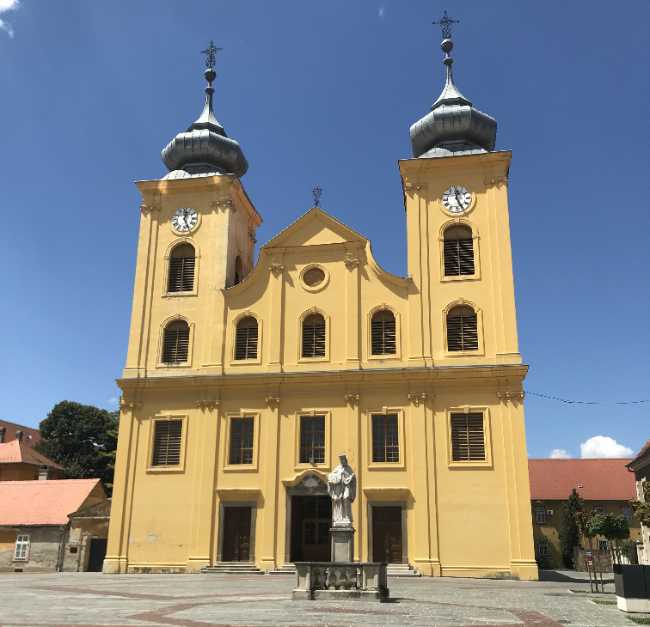
The church is located at Trg Jurja Križanića 1, 31000, Osijek, Croatia. It sits proudly in the western part of Tvrđa, the city's famous old town district, which is a massive, star-shaped Baroque military fortress built along the Drava River. Because the church is firmly embedded within the historic fortress walls, you can easily walk to Osijek's best cultural attractions in just a few minutes. A quick stroll eastward through the cobblestone streets leads you directly into Holy Trinity Square. Around this main square, you can visit the grand Museum of Slavonia, housed inside the old City Hall, and the fascinating Archaeological Museum Osijek. Heading just a bit north brings you to the Water Gate, the only surviving original entrance to the fortified town, and the rugged stone walls of the Osijek Bastion. If you exit the fortress grounds and walk west down European Avenue, you will quickly reach the grand neo-Renaissance palace that houses the Museum of Fine Arts.
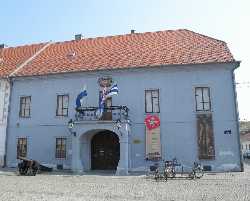 Museum
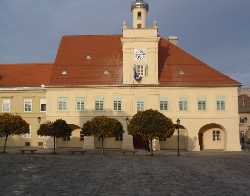 Museum
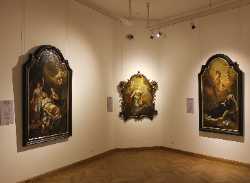 Museum
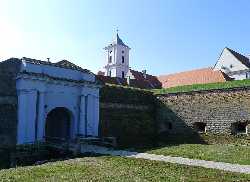 Fortress
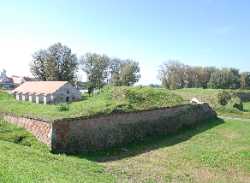 Fortress
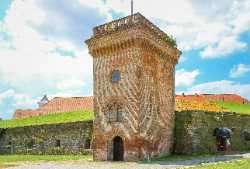 Fortress
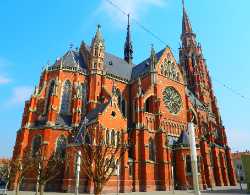 Cathedral
 Theatre