Brancepeth Castle
Brancepeth Castle is one of County Durham’s most intriguing historic strongholds, its long, layered history reflected in a mix of medieval fortification and later romantic restoration. Originally built in the 12th century and later expanded by the powerful Neville family, the castle played a role in regional conflicts, including the Rising of the North in 1569. Its thick curtain walls and imposing gatehouse still convey the defensive strength that once guarded this strategic site. Inside, visitors can explore a series of grand rooms restored in the 19th century by architect Anthony Salvin, whose work gave the castle its distinctive Gothic Revival character. The Baron’s Hall, with its timber roof and atmospheric proportions, is a highlight, often used today for concerts and events. Smaller chambers reveal stone fireplaces, carved details, and glimpses of the castle’s medieval core beneath Victorian embellishment. The chapel, with its stained glass and quiet ambience, offers a contrasting space of reflection. Throughout the castle, displays and interpretation panels explain its evolution from fortress to stately home. Surrounded by parkland and approached through a dramatic entrance, Brancepeth Castle remains a compelling blend of military heritage and romantic architecture.
Brancepeth United Kingdom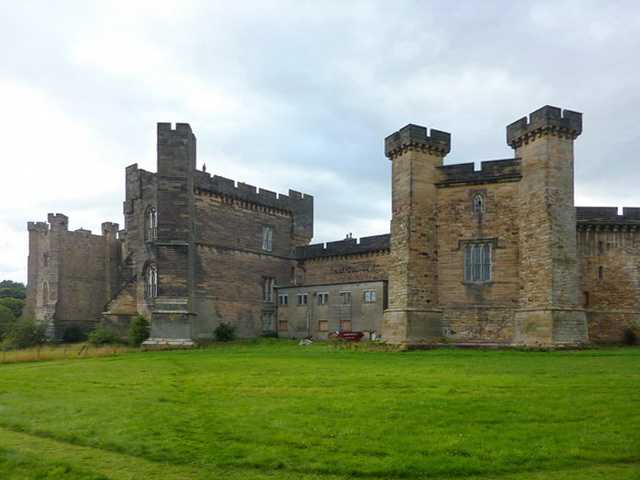
Brancepeth Castle stands in the village of Brancepeth in County Durham, at Brancepeth, Durham DH7 8DF. It sits just off the A690, about five miles south-west of Durham city, surrounded by its own parkland. A short drive takes you into Durham itself, home to the magnificent Durham Castle and Cathedral that together form a World Heritage Site. Nearby you’ll also find the Oriental Museum with its collections from Asia and ancient Egypt, and the charming Crook Hall and Gardens. A little further south is Auckland Palace in Bishop Auckland, once the seat of the Prince Bishops.