Newhaven Fort
Newhaven Fort is one of Britain’s best‑preserved Victorian coastal defences, built in the 1860s to guard the harbour and protect the approach to London. Its position high above the cliffs gives it a commanding view of the Channel, and its design—cut directly into the chalk—was considered state‑of‑the‑art for its time. During both World Wars, the fort played a crucial role in coastal surveillance, anti‑aircraft defence, and military training. Inside, you can explore the underground tunnels, a network of echoing passages that once connected ammunition stores, shelters, and operational rooms. The Grand Magazine remains a highlight, showing how gunpowder and shells were safely handled. The Ramparts Walk offers sweeping sea views and reveals the original gun emplacements that defended the harbour entrance. The fort’s exhibitions cover wartime communications, local military history, and life on the home front, with atmospheric recreations of barracks and command posts. A standout feature is the Blitz Experience, an immersive walkthrough that captures the tension of air‑raid nights. Newhaven Fort blends Victorian engineering with 20th‑century history, creating a vivid journey through Britain’s coastal defence heritage.
Newhaven United Kingdom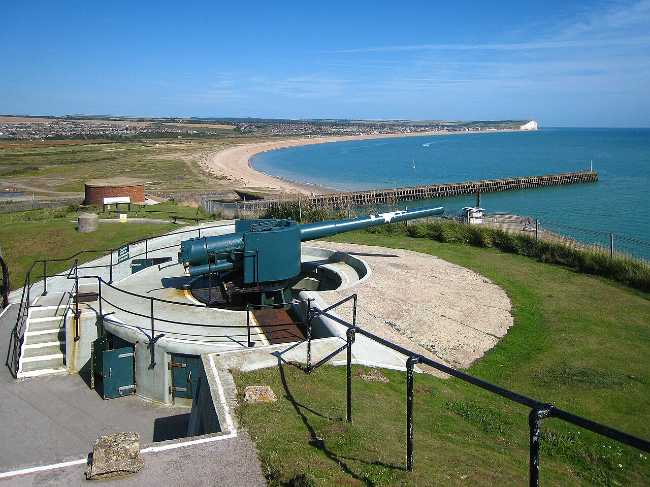
Newhaven Fort sits on the clifftops above the harbour in the town of Newhaven, East Sussex. You’ll find it along Fort Road, Newhaven, BN9 9DS, with clear views out over Seaford Bay and the English Channel. It’s a big Victorian fortress that’s now open as a museum, full of tunnels, gun positions and exhibitions that take you through its history from the 1860s right up to the Second World War. There’s space to wander the ramparts and even an adventure playground for younger visitors. Just down the road you’ll come across Paradise Park, a popular spot with gardens, a dinosaur trail and plenty to keep families busy. A short stroll away is the Newhaven Maritime Museum, which looks after local seafaring stories and artefacts. Nearby on the coast are the quiet remains of Tide Mills, an old abandoned village by the beach, and the open paths of Castle Hill Nature Reserve. The harbour itself is close by if you fancy a wander along the waterfront. It’s all nicely linked so you can mix the fort with a bit of the town and the shore without needing to travel far.
 Museum