St Briavels Castle
St Briavels Castle is one of Gloucestershire’s most atmospheric medieval sites, perched above the Wye Valley and known for its unusual history as the King’s St Briavels Stamping Station, where thousands of iron arrowheads were produced for royal armies. Built in the early 12th century, it served not as a noble residence but as an administrative and military centre for the Forest of Dean, giving it a character very different from the grand castles of the region. Inside, the castle feels wonderfully raw and authentic. The Gatehouse, with its massive portcullis and murder holes, immediately sets the tone. The Constable’s Rooms reveal how officials once lived and worked, with thick stone walls, narrow windows and original fireplaces. The Chapel is a highlight, decorated with delicate medieval carvings that contrast with the fortress‑like surroundings. One of the most intriguing spaces is the Prison, where graffiti carved by inmates—some dating back centuries—still marks the walls. The Solar, once a private chamber, offers views over the valley and hints at the castle’s later use as a residence.
St Briavels United Kingdom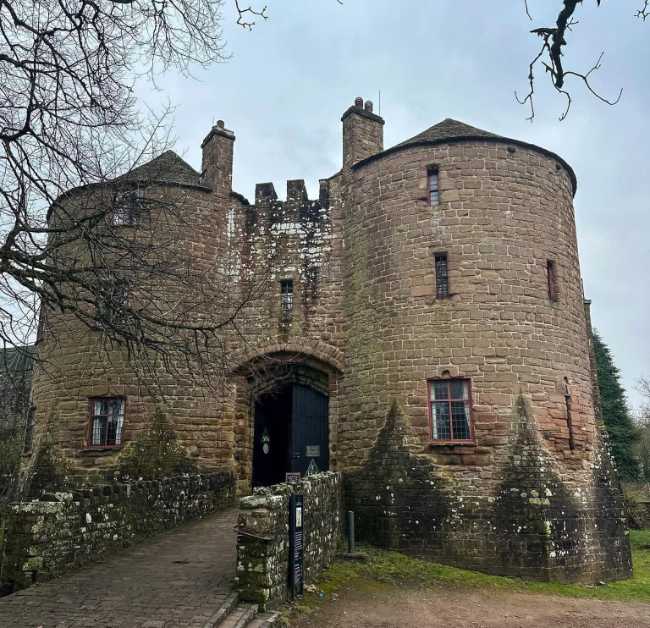
St Briavels Castle stands in the quiet village of St Briavels in west Gloucestershire, at Church Street, St Briavels, Lydney, Gloucestershire GL15 6TA. This sturdy Norman fortress once guarded the edge of the Forest of Dean and later served as a royal hunting lodge and even a crossbow-bolt factory. Right opposite the castle sits the ancient parish church of St Mary the Virgin, a peaceful Norman building that is well worth a look. A short drive takes you to Clearwell Caves, atmospheric old iron mines that families love to explore. Further along the Wye Valley you will find the romantic ruins of Tintern Abbey, and a little further still is Goodrich Castle, one of the finest and best-preserved medieval castles in England. The surrounding Forest of Dean and the steep wooded slopes of the River Wye offer endless gentle walks and quiet countryside.