Hurst Castle
Hurst Castle stands at the end of a long shingle spit overlooking the Solent, a dramatic setting that has shaped its history for nearly 500 years. Built by Henry VIII in the 1540s, it formed part of his chain of coastal defences and later played a role in the Civil War, when Charles I was held here briefly before his execution. Its isolated position gives the fortress a uniquely atmospheric character, especially when approached by the narrow causeway or by boat. Inside the Tudor keep, visitors can explore thick‑walled gun rooms, vaulted passages and the central courtyard that once housed soldiers and artillery. The later Victorian additions are equally striking: long, curved casemates designed to hold massive guns capable of defending the western entrance to the Solent. These chambers, with their iron fittings and echoing corridors, offer a powerful sense of 19th‑century military engineering. One of the most interesting features is the lighthouse, built in the 1860s and still standing beside the castle. Exhibits throughout the site explain its defensive evolution, from Tudor cannons to modern coastal batteries, and the strategic importance of guarding the approaches to Portsmouth.
Milford on Sea United Kingdom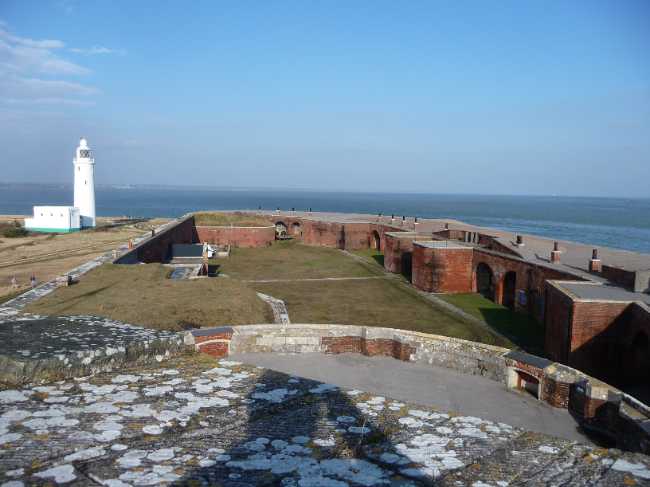
Hurst Castle stands at the end of a long shingle spit stretching out into the Solent, near the villages of Keyhaven and Milford on Sea in Hampshire. The address is Hurst Castle, Keyhaven, Lymington, SO41 0TP. You reach it either by a short ferry ride from Keyhaven or by walking the couple of miles along the spit from Milford on Sea. The views from the top of the Tudor keep are outstanding, looking across to the Needles on the Isle of Wight and along the coast. Nearby Lymington is a pretty harbour town with independent shops and the St Barbe Museum and Art Gallery, which explores the local New Forest coastline history. A short drive inland brings you into the New Forest itself for walks among the trees and open heath. Across the water you can hop over to Yarmouth on the Isle of Wight for another of Henry VIII’s coastal castles. Beaulieu, with its Motor Museum and abbey ruins, is also within easy reach. The whole area mixes sea, spit and forest, making it easy to combine the castle with a relaxed coastal or countryside day out.