Berkhamsted Castle
Berkhamsted Castle in Hertfordshire is one of the most evocative Norman fortresses in England, its vast earthworks and stone remains telling a story that stretches back nearly a thousand years. Built shortly after the Conquest, it became a powerful stronghold of the Earls of Cornwall and later the Crown, witnessing royal visits, political negotiations, and even a dramatic surrender: in 1066, the English nobility submitted to William the Conqueror here, marking the end of Anglo‑Saxon rule. Today, visitors explore an impressive motte-and-bailey layout, still clearly defined despite the passage of centuries. The massive ditches and ramparts give a vivid sense of the castle’s defensive strength. Within the inner bailey, the foundations of the great hall, chapel, and tower reveal how extensive the complex once was, offering glimpses into medieval domestic and ceremonial life. One of the most interesting features is the surviving stone curtain wall, parts of which rise several metres high. These remnants show the transition from early timber fortifications to more durable Norman masonry. Informational panels around the site help visitors imagine the castle at its peak, bustling with soldiers, servants, and noble households.
Berkhamsted United Kingdom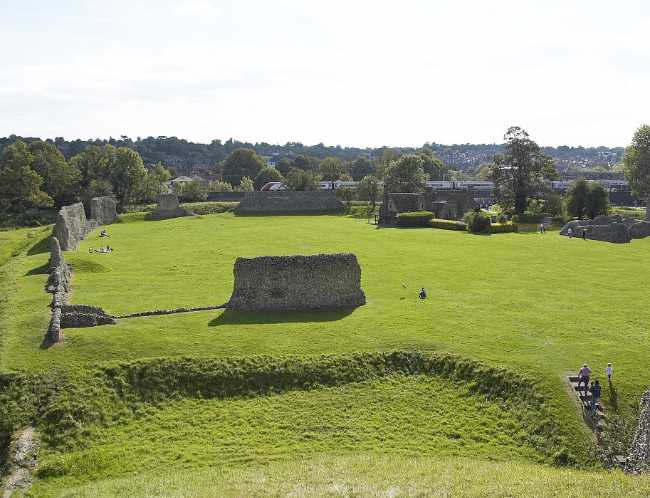
Berkhamsted Castle is right in the town of Berkhamsted in west Hertfordshire. You will find it at White Hill, Berkhamsted HP4 1LJ, just a minute's walk from the High Street and right next to Berkhamsted train station. It is an English Heritage site, a big Norman motte and bailey castle ruin with double moats, once one of the most important castles in England where William the Conqueror received the submission of London. In Berkhamsted itself you have the lovely old High Street with independent shops and cafes, St Peter's Church, one of the largest parish churches in Hertfordshire, and the Berkhamsted Old Town Hall and museum vibe of the town. A short drive brings you to Ashridge Estate and the Bridgewater Monument, with huge woodland walks and deer park managed by the National Trust. For grand houses, you have Ashridge House nearby, and a bit further Hatfield House and Knebworth House. History lovers will also enjoy the Roman town of Verulamium in St Albans, with Verulamium Museum, St Albans Cathedral, and Tring with the Natural History Museum at Tring, all within half an hour.