Farringford House
Farringford House is one of the Isle of Wight’s most evocative literary landmarks, best known as the longtime home of Alfred, Lord Tennyson. The poet moved here in 1853, seeking quiet and inspiration, and the house became the setting where he wrote many of his most celebrated works. One of its most interesting facts is that Tennyson would walk the downs daily, believing the landscape helped him shape his poetry — a tradition still honoured by visitors who follow the same route. Inside, the house has been carefully restored to reflect its Victorian character. Rooms are furnished as they were in Tennyson’s time, creating an intimate sense of the poet’s domestic life. His study, with its writing desk, books and personal objects, is a highlight, offering a glimpse into his working habits and creative world. Family rooms display portraits, letters and memorabilia that reveal the close-knit household that surrounded him. The grounds add to the atmosphere: sheltered gardens, winding paths and views toward the downs echo the tranquillity that drew Tennyson to Farringford. The walled garden and kitchen garden show the estate’s practical side, while the wider landscape preserves the sense of retreat that made the house so beloved.
Freshwater United Kingdom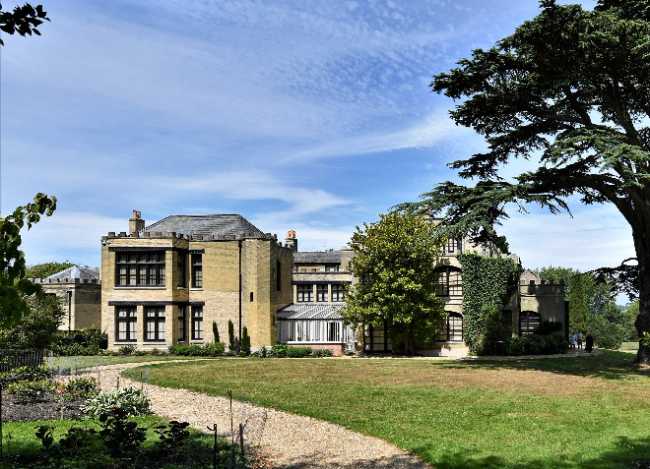
Farringford House is a lovely, literary corner of the Isle of Wight with a real sense of peace. You will find it at Bedbury Lane, Freshwater Bay, Isle of Wight PO40 9PE. It sits right on the edge of Freshwater Bay at the western tip of the island, looking out over the Downs and the sea. It was built in 1806 in Gothick style and from 1853 until his death in 1892 it was the main home of Alfred, Lord Tennyson, the Poet Laureate. He wanted a retreat from London, and this secluded spot became famous for visitors like Lewis Carroll, Charles Darwin and the photographer Julia Margaret Cameron. Right nearby you have Freshwater Bay beach, Tennyson Down with its monument at the top, and The Needles, the iconic chalk stacks with the old battery and chairlift. You also have Alum Bay with its coloured sands and glass making. If you like castles and grand houses, you are not far from Yarmouth Castle, Henry VIII's little coastal fort on the harbour, and Osborne House in East Cowes, Queen Victoria's beautiful seaside palace. You also have Carisbrooke Castle in the middle of the island, the big medieval castle where Charles I was imprisoned. There is also Dimbola Lodge museum, once Julia Margaret Cameron's home, and the West Wight countryside which is designated as an Area of Outstanding Natural Beauty.
 Museum