Tattershall Castle
Tattershall Castle is one of Lincolnshire’s most striking medieval landmarks, famous for its bold red‑brick design. Built in the 1430s by Lord Ralph Cromwell, the castle was a statement of wealth and political ambition. Its great tower rises more than 30 metres, making it one of the finest surviving examples of English brick architecture from the period. The brickwork itself is an interesting fact: over 700,000 bricks were used, an extraordinary luxury in the 15th century. Inside, the castle reveals a surprisingly refined world. The Great Hall showcases tall fireplaces, carved stone details and wide windows that once held stained glass. Cromwell’s private chambers, including the audience chamber and withdrawing room, show how the tower functioned as both fortress and residence. The winding staircases lead to rooftop battlements, offering panoramic views across the flat Lincolnshire landscape. One of the most atmospheric features is the echoing basement, where storage rooms and service areas hint at the daily life of the household. The castle also preserves traces of medieval wall paintings and decorative stonework that reveal its former splendour.
Tattershall United Kingdom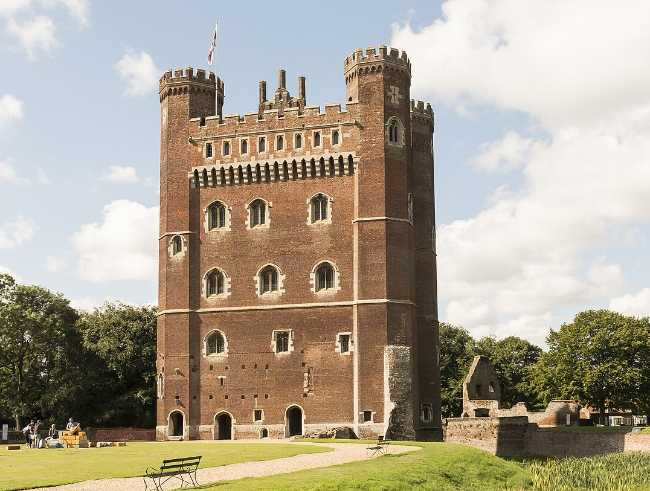
Tattershall Castle sits on Sleaford Road in the village of Tattershall, Lincolnshire, with the postcode LN4 4LR. It’s a striking red-brick tower rising from the flat fenland landscape, looked after by the National Trust and surrounded by its moats and grounds. The castle was built in the 15th century and still feels imposing as you climb the spiral stairs to the battlements for wide views across the countryside. Right beside it stands the handsome Holy Trinity Collegiate Church, which shares much of the same history. A short distance away you’ll find Tattershall Farm Park, popular with families for its animals and outdoor space, and Tattershall Lakes for a more modern waterside feel. Nearby Coningsby is home to the Battle of Britain Memorial Flight, where you can often catch glimpses of historic aircraft. A little further afield, Woodhall Spa offers a pleasant village atmosphere, while Lincoln itself with its castle and cathedral makes a straightforward day trip. It’s a quiet, open part of Lincolnshire that pairs the castle nicely with a mix of history and countryside.