Lindisfarne Castle
Lindisfarne Castle stands on a volcanic crag above Holy Island, a place shaped as much by tides as by history. Built in the 16th century from stones of the dissolved priory, it later became one of Britain’s most charming coastal residences when architect Edwin Lutyens transformed it in 1903. His redesign blended rugged Tudor fortifications with Arts and Crafts elegance, creating a building that feels both defensive and domestic. Inside, the rooms reveal Lutyens’ meticulous eye. The Upper Battery offers sweeping views across the North Sea and the Farne Islands. The Long Gallery, with its warm timber and carefully framed windows, was designed to capture shifting coastal light. The Kitchen and Scullery show how the castle functioned as a working home, while the Dining Room retains its atmospheric simplicity. One of the most striking features is the Ship Room, furnished with nautical motifs that echo the island’s maritime past. Outside, the walled Gertrude Jekyll garden—a small but exquisite plot—adds colour and softness to the stark landscape.
Holy Island United Kingdom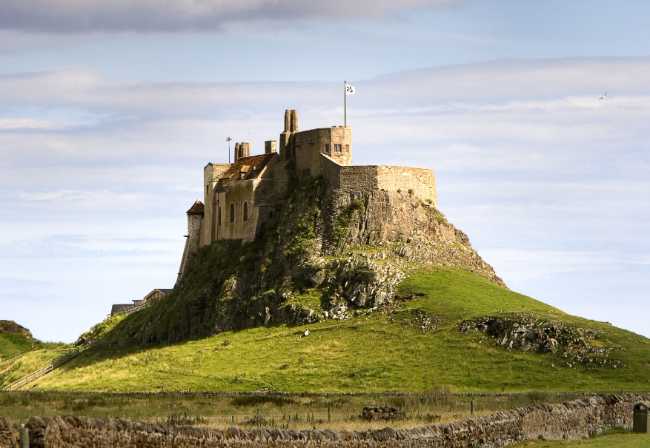
Lindisfarne Castle stands on Holy Island, also known as Lindisfarne, just off the Northumberland coast near Berwick-upon-Tweed. You’ll find it at Holy Island, Berwick-upon-Tweed, Northumberland, TD15 2SH. The island is reached by a tidal causeway, so the castle feels properly cut off from the mainland once the sea comes in. It sits high on a rocky crag overlooking the harbour and the open water, with sweeping views along the coast. Right on the island itself you can wander over to the ruins of Lindisfarne Priory, the ancient monastic site that gives the place its quiet, spiritual feel. Beside the castle is a small walled garden designed by Gertrude Jekyll, and a short walk away are the old lime kilns and the quirky upturned boat sheds that line the shore. A little further along the coast lies Bamburgh Castle, another dramatic fortress looking out to sea, and in the village of Bamburgh you’ll also find the Grace Darling Museum. It’s an easy, atmospheric spot that mixes history, sea air and a sense of isolation without ever feeling too busy.