Heatherslaw Corn Mill
Heatherslaw Corn Mill, set beside the River Till on the Ford & Etal Estate, is one of Northumberland’s most evocative working mills. Dating from the 19th century, it still grinds flour using traditional water‑powered machinery, offering visitors a rare chance to see industrial heritage in action. The mill’s great waterwheel is its star feature: a 16‑foot iron giant that drives the gears, hoppers and millstones much as it did over a century ago. Inside, you can follow the full journey of grain, from the grain loft down through the milling floors to the final product. The original machinery—belts, pulleys, sifters and stone grinders—remains in place, creating an immersive sense of Victorian engineering. Interpretive displays explain how local farms supplied the mill, how millers maintained the equipment, and how flour production shaped rural life. The viewing gallery lets you watch the milling process safely, while hands‑on exhibits show different grains, tools and techniques. A small exhibition area explores the history of Ford & Etal, including maps, photographs and stories of the estate’s workers. Heatherslaw Corn Mill is both a living museum and a peaceful riverside landmark, blending craftsmanship, landscape and history.
Cornhill-on-Tweed United Kingdom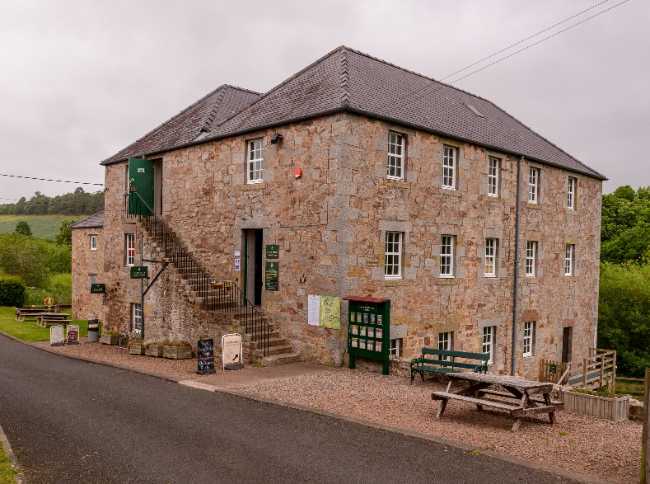
Heatherslaw Corn Mill sits in the heart of northern Northumberland, just a few miles south of the Scottish border in England. You will find it nestled along the banks of the River Till near the small community of Cornhill-on-Tweed. The full address for visitors heading out to explore the site is Heatherslaw Corn Mill, Heatherslaw, Cornhill-on-Tweed, Northumberland, TD12 4TJ. It is tucked neatly between the historic villages of Ford and Etal, which together form the picturesque Ford and Etal Estate. Getting out to explore the surrounding area is exceptionally easy because the mill sits right in the middle of several fantastic local sights. Right across the river, you can take a ride on the Heatherslaw Light Railway, a narrow-gauge steam train that offers scenic trips along the river valley. If you travel just up the road to the village of Etal, you can wander around Etal Castle, a striking fourteenth-century ruined stronghold managed by English Heritage. Over in the neighboring village of Ford, culture lovers can visit Lady Waterford Hall, a former village school turned art gallery that houses nineteenth-century watercolor murals painted by Louisa Anne, Marchioness of Waterford.