Clun Castle
Clun Castle is one of Shropshire’s most evocative medieval ruins, standing high above the River Clun and overlooking one of the county’s most peaceful valleys. Built shortly after the Norman Conquest, it became a key Marches fortress guarding the turbulent borderlands between England and Wales. One of its most interesting historical notes is that by the 14th century the castle was described as “in decay,” yet it continued to play a symbolic role in regional defence for centuries. Inside the site, visitors can explore the dramatic remains of the great keep, its thick walls and jagged edges rising above the surrounding countryside. The layout of the inner bailey is still visible, with foundations hinting at halls, service buildings, and domestic quarters that once supported a bustling garrison. The south tower, leaning slightly from centuries of weathering, is one of the castle’s most striking features and offers a memorable silhouette against the sky. Interpretation panels explain Clun’s strategic importance, its involvement in border conflicts, and its later decline as warfare changed. The surrounding earthworks and steep slopes reveal how the castle’s natural setting was used to strengthen its defences.
Clun United Kingdom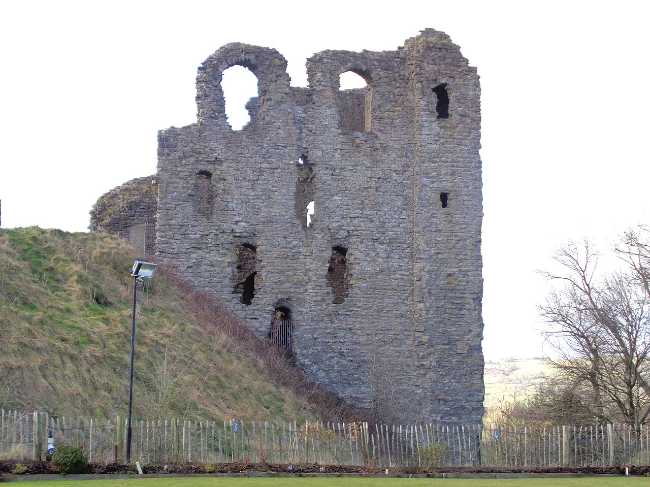
Clun Castle stands proudly on a high mound overlooking the River Clun in southwestern Shropshire. You can find this dramatic ruined fortress at Newport Street, Clun, Craven Arms, Shropshire, SY7 8JT. Built shortly after the Norman Conquest to protect the Welsh border, the site is famous for its towering stone keep, which was unusually constructed on the side of an earlier earthwork mound rather than directly on top. The surrounding area in the Shropshire Hills offers a wonderful selection of historic and cultural sites to visit. Just a short walk from the ruins across the river sits the ancient Clun Packhorse Bridge, a famous medieval crossing point in the heart of the village. Heading east toward Craven Arms, you can stop by the Shropshire Hills Discovery Centre to learn about the region's natural history or pop into the Land of the Lost Content Museum to see its vast collection of twentieth-century memorabilia.Further east lies Stokesay Castle, widely considered one of the finest and best-preserved fortified manor houses in England. Travelling slightly south brings you to the grand border fortress of Ludlow Castle, set above the River Teme alongside the medieval town's bustling markets and St Laurence's Church. To the north, history enthusiasts can venture to Bishop's Castle or discover the ancient earthworks along Offa's Dyke Path, making it a brilliant spot for exploring rural history.