St Margaret’s Cave
St Margaret’s Cave in Dunfermline is one of Fife’s most atmospheric historic sites, a small sanctuary hidden beneath a modern car park yet deeply tied to Scotland’s medieval past. Tradition holds that Queen Margaret, later canonised in 1250, used this cave for private prayer in the 11th century. The site survived near-destruction in the 1960s, when plans to bury it under concrete sparked public outcry; a tunnel was built instead, preserving access to the shrine. Visitors descend around 87 steps through a long, echoing tunnel where soft lighting and recorded chants set a contemplative tone. At the end lies the cave itself: a compact chamber roughly 10 feet by 8 feet, with two stone benches carved into the rock and a covered medieval well. A statue of St Margaret marks the spot associated with her prayers, while interpretive panels explain her life, charitable works, and influence on Dunfermline’s early royal and religious landscape. Though modest in size, the cave’s atmosphere is striking—cool, dim, and quietly immersive. Its preserved medieval structure, steady year‑round temperature, and connection to Dunfermline’s historic tunnel network make it a rare surviving example of a royal devotional space. For many visitors, the most compelling experience is simply standing where a queen once sought solitude more than 900 years ago.
Dunfermline Scotland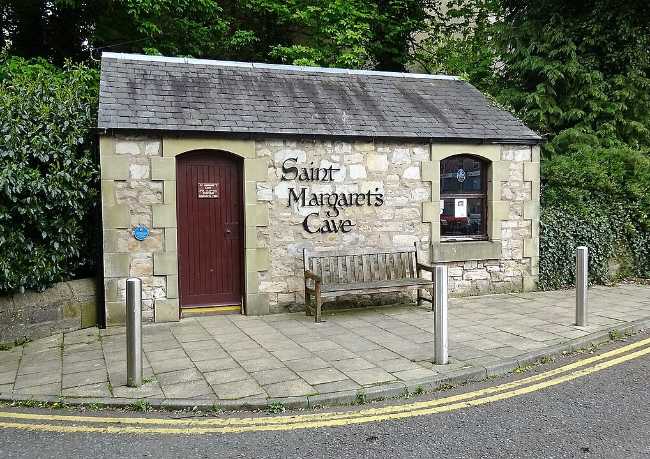
St Margaret’s Cave sits quietly in the heart of Dunfermline in Fife, right at the back of Glen Bridge Car Park on Chalmers Street, postcode KY12 8DF. You would never guess from the surface that a small stone entrance in the north corner of an ordinary car park leads down 87 steps through a tunnel to the little rocky cave where Queen Margaret used to slip away and pray more than nine hundred years ago. Just a short stroll away stands Dunfermline Abbey and the remains of the royal palace, both closely tied to Margaret and her husband King Malcolm Canmore. The abbey still holds a special place as one of Scotland’s most important historic churches, and the palace ruins sit right beside it. A few minutes further on you reach the Abbot House, the town’s oldest surviving building, and Pittencrieff Park (locals just call it the Glen), where the crumbling walls of Malcolm’s old tower can still be found among the trees. The Carnegie Library and Galleries are also nearby if you fancy a look at local history and art.
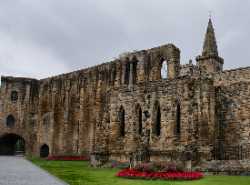 Abbey
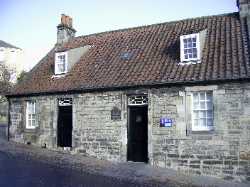 Museum
 Museum