Highland Folk Museum
The Highland Folk Museum in Newtonmore is one of the Highlands’ most immersive heritage attractions, offering a vivid, open‑air journey through centuries of rural life. Founded in 1935, it was Britain’s first open‑air museum, inspired by Scandinavian folk museums. Its most famous feature is the recreated 1700s township, used as a filming location for Outlander, where turf‑roofed houses and working hearths bring the past to life with remarkable authenticity. Inside the museum’s various buildings, visitors can explore traditional crafts, domestic tools, and farming equipment that reveal how Highland communities lived, worked, and adapted to their environment. The 1930s schoolroom is a highlight, complete with wooden desks, ink pots, and period lessons that capture the feel of early 20th‑century education. Other displays include weaving looms, blacksmith tools, and objects linked to crofting, forestry, and local trades. The site stretches over a mile, with woodland paths connecting historic structures, workshops, and exhibition spaces. Costumed interpreters often demonstrate skills such as spinning, baking, and woodworking, adding a lively human element to the experience. With its blend of reconstructed buildings, hands‑on history, and beautiful outdoor setting, the Highland Folk Museum offers one of the most engaging and atmospheric windows into traditional Highland life.
Newtonmore Scotland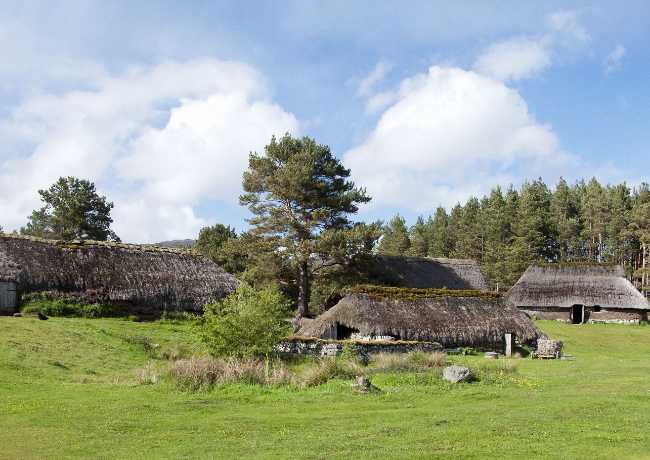
The Highland Folk Museum is an engaging open-air museum that brings centuries of Scottish Highland life to life. You can find it spread across a spacious site in the Spey Valley, right on the edge of the village of Newtonmore. For satnav or map navigation, the official postal address is Highland Folk Museum, Aultlarie Croft, Kingussie Road, Newtonmore, Highland, Scotland, PH20 1AY. The surrounding Badenoch and Strathspey district offers a wonderful selection of historic landmarks, cultural attractions, and scenic stops to explore. Just a short drive down the road in nearby Kingussie stand the majestic ruins of Ruthven Barracks, an 18th-century government infantry fortification perched dramatically on a hilltop. Traveling slightly north leads to the Clan Macpherson Museum in Newtonmore, which displays fascinating clan artifacts, weapons, and local history exhibitions. Heading further north towards Aviemore brings you to Rothiemurchus Estate and the peaceful ruins of Loch an Eilein Castle, sitting on a tiny island within a surrounding loch. Moving east towards Nethy Bridge, you can visit Castle Roy, an ancient 12th-century stone fortress ruin.
 Museum