The Wick Heritage Museum
The Wick Heritage Museum offers a compact but richly detailed journey into the story of Wick, shaped by fishing, craftsmanship and everyday Highland life. Housed in the historic Thomas Telford–designed Town Hall, the museum preserves objects that reveal how this remote coastal community became one of Europe’s busiest herring ports. Inside, one of the most engaging displays is the recreated cooperage, where you can see the tools and techniques used to make the barrels that once fuelled Wick’s booming herring trade. The photography collection is another highlight: thousands of images taken by the Johnston family from the 1860s onwards, capturing fishermen, families, and dramatic harbour scenes with remarkable clarity. You can explore domestic artefacts, Victorian clothing, and intricate silverware produced by local craftsmen. The museum also holds memorabilia from Wick’s maritime past, including ship models and navigation instruments that illustrate the dangers and ingenuity of seafaring life.
Wick Scotland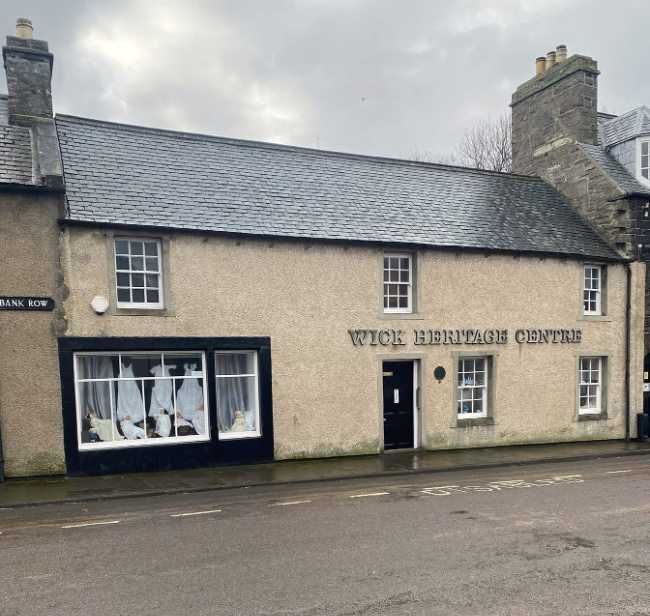
The Wick Heritage Museum sits right in the heart of Wick, up in the far north of the Scottish Highlands in Caithness. You’ll find it at 18-27 Bank Row, Wick, KW1 5EY, tucked into a row of old buildings near the harbour in the historic Pulteneytown area. It’s an easy place to reach if you’re already in town, and once you’re there you can wander straight down to Wick Harbour itself, which still has that working fishing feel and makes a pleasant stroll. Just a short distance away stands the Castle of Old Wick, one of the oldest castle ruins in Scotland, perched dramatically on the cliffs with fine views out over the sea. A little further along the coast you’ll come to Castle Sinclair Girnigoe, another striking set of ruins that reward a bit of walking with sweeping coastal scenery. While you’re in Wick you can also pop into the Old Pulteney Distillery for a look at one of Scotland’s most northerly whisky makers, or head out towards Noss Head where the lighthouse and surrounding cliffs offer more of that wild Caithness atmosphere. Everything sits close enough that you can easily combine a museum visit with a castle or two and still have time left to enjoy the harbour.
 Castle
 Castle