Canterbury Castle
Canterbury Castle is one of the earliest Norman strongholds in England, its massive stone keep rising above the city as a reminder of Canterbury’s strategic importance after the Conquest. Built in the late 11th century to secure the route between Dover and London, the castle once formed part of a larger defensive complex that included walls, towers, and a bustling bailey. Today, the surviving keep stands as a dramatic ruin, its thick walls, arched openings, and weathered masonry revealing centuries of adaptation and decline. The surrounding green space softens its imposing form, offering a quiet place to reflect on the layers of history embedded in the structure. Though only a fragment of its former power, Canterbury Castle remains a compelling landmark that connects the modern city with its medieval past.
Canterbury United Kingdom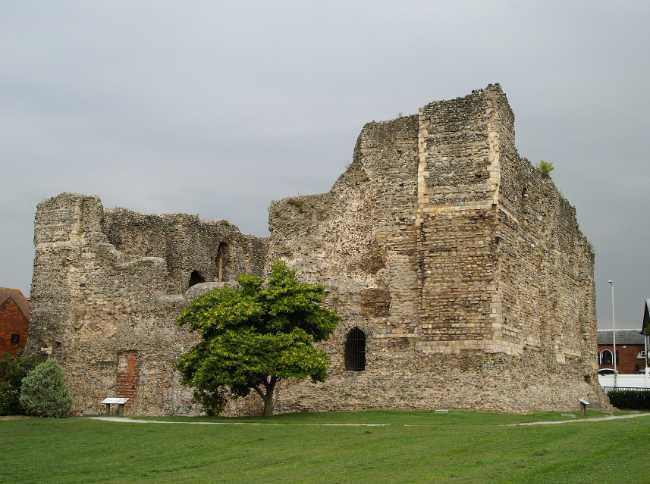
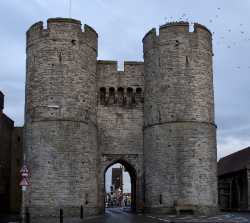
Canterbury Castle is located in the city centre of Canterbury, Kent, England, just off Gas Street and a five-minute walk from Canterbury East Station and the main bus station. The Norman stone keep stands beside the old city wall, with Dane John Gardens directly opposite. The castle is a ruined 12th-century keep originally built as one of three Royal castles in Kent, alongside Dover and Rochester, to guard the Roman road from Dover to London. Though only the shell remains and viewing is from outside, it marks the site of a wooden motte-and-bailey erected in 1066, making it a key piece of the city’s Norman history. Nearby attractions are plentiful and within easy walking distance. Dane John Gardens, just across the road, feature the Dane John Mound with panoramic views over the city, formal gardens, the Font Fountain, and a bandstand that hosts summer concerts. The city walls and Westgate Towers Museum are ¼ mile away, offering battlement views and exhibits on the gate’s history as a gaol. Canterbury Cathedral, part of the UNESCO World Heritage Site with St Augustine’s Abbey and St Martin’s Church, is a 10-minute walk through the historic centre and draws pilgrims to the site of Thomas Becket’s martyrdom. The Beaney House of Art & Knowledge, Canterbury Roman Museum with underground mosaics, and Eastbridge Hospital on the King’s Mile are all close by.
 Abbey
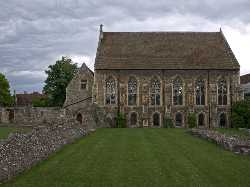
Abbey
 Museum
 Museum
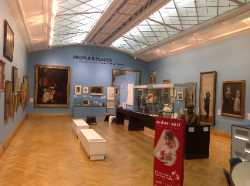
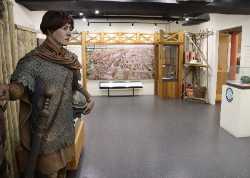
 Museum