Strač Fortress
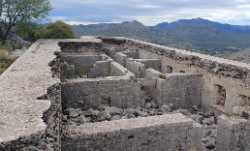
Strač Fortress is one of Trebinje’s most dramatic relics of the Austro‑Hungarian military network, perched high above the city on a rocky ridge. Built in the late 19th century, it was designed as a massive underground stronghold—so large and advanced for its time that locals still call it “the sleeping giant.” Its position offered full control over the valley and routes toward Dubrovnik, making it a key defensive point in the empire’s southern frontier. Inside, the fortress feels like a labyrinth. Long corridors carved into the mountain lead to ammunition rooms, barracks, and observation posts. The scale is surprising: some chambers stretch dozens of meters, with thick concrete walls engineered to withstand heavy artillery. One of the most intriguing features is the system of ventilation shafts and escape tunnels, a reminder of how self‑sufficient the fortress had to be during sieges. Visitors can explore the upper terraces, where rusted cannons and lookout positions still frame sweeping views of Trebinje and the surrounding karst landscape. The contrast between the fortress’s harsh military geometry and the soft Herzegovinian scenery makes the site especially atmospheric.
Trebinje Bosnia and Herzegovina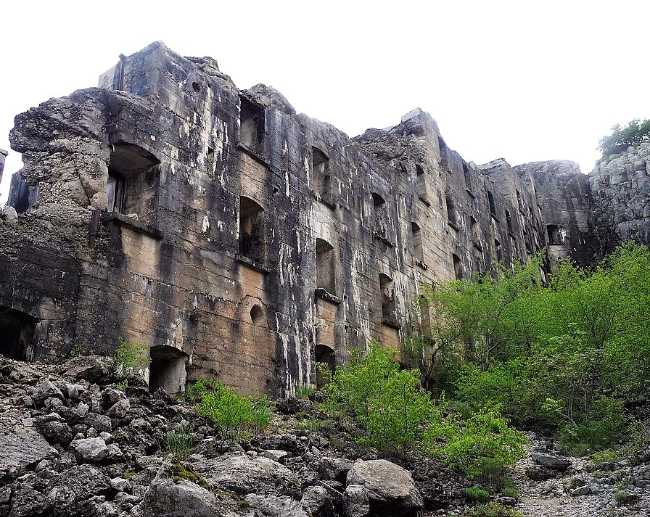
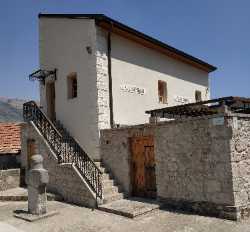
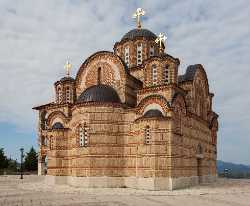
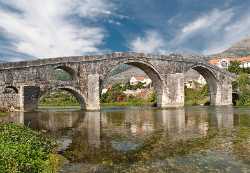
The fortress is located at Rapti Zupci 1, Trebinje 89101, Bosnia and Herzegovina. It is situated roughly seven kilometers southeast of the city center, set high in the hills above the settlement of Gornje Čičevo. Because the fortress sits in the quiet countryside overlooking Trebinje, reaching the town center takes just a short drive down the hill. Down in the valley, you can explore the stone streets of Trebinje's Old Town, visit the Herzegovina Museum, and walk across the famous Arslanagić Bridge spanning the Trebišnjica River. Perched on the opposite hill, you will find the gorgeous Hercegovačka Gračanica monastery complex, while slightly further out in the region lies the historic Tvrdoš Monastery and the ancient St. Paul's Cave.
 Museum
 Fortress
 Church
 Tourist attraction
 Bridge