Lezhë Castle
Lezhë Castle rises above the Drin valley with a commanding presence, its hilltop silhouette tracing more than two millennia of history. Originally an Illyrian fort, later strengthened by Byzantines and Venetians, it became a key Ottoman stronghold. This layered past makes the castle one of Lezhë’s most compelling landmarks, where every stone hints at a different era. Inside the walls, visitors step into a broad courtyard framed by rugged fortifications. The most interesting feature is the Venetian‑era gateway, built with precisely cut blocks that contrast with the rougher Ottoman additions. Walking along the ramparts, you can spot narrow openings once used by archers and later adapted for small cannons. A highlight is the panoramic viewpoint near the upper tower. From here, the Adriatic coast, the Drin River, and the city of Lezhë unfold in a sweeping arc. It’s easy to see why so many powers fought to control this hill. Another atmospheric corner is the cistern, a deep stone chamber that stored water during sieges—its cool echo still intact.
Lezhë Albania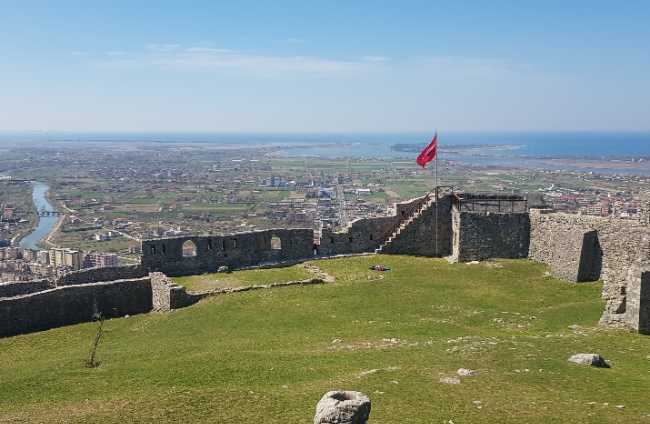
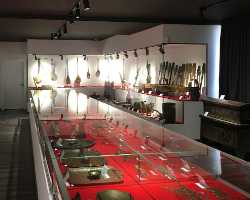
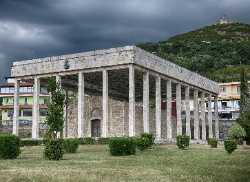
Lezhë Castle sits high on a hill just east of the city centre, rising above the modern town of Lezhë. You’ll find it a short uphill walk or drive from the main square, with the road and paths leading up from the lower streets near the Skanderbeg area. From the walls the views stretch over the town, the Drin River plain and toward the Adriatic. Down below in the centre you can easily reach the Skanderbeg Memorial, the resting place of Albania’s national hero, and the ruins of ancient Lissus that lie nearby. The Ethnographic Museum is also close, inside the Palace of Culture on Skanderbeg Square. Everything connects nicely, so after exploring the castle and taking in the panoramas you can head back down to the memorial, the ancient remains or the museum without any rush.
 Museum
 Historical Landmark
 Cathedral
 Church
 Theatre