Skanderbeg Memorial
Skanderbeg Memorial in Lezhë is one of Albania’s most symbolic historic sites, marking the resting place of Gjergj Kastrioti Skanderbeg, the national hero who led the 15th‑century resistance against the Ottoman Empire. Built in 1981, the memorial stands on the foundations of the former St. Nicholas Church, where Skanderbeg was buried in 1468. This blend of medieval sacred space and modern monumental design gives the site a uniquely layered character. Inside, the memorial’s most striking feature is the central hall, where stone arches echo the original church layout. The atmosphere is solemn, shaped by dim lighting and the weight of history. At the center lies the symbolic tomb, crafted from pale stone and surrounded by reliefs depicting key moments of Skanderbeg’s campaigns. These carvings, created by Albanian sculptors, offer a vivid narrative of battles, alliances, and the hero’s enduring legacy. Another highlight is the collection of historical emblems displayed along the walls. They trace the evolution of noble families who supported Skanderbeg’s league. The memorial also preserves fragments of the medieval church—floor stones, wall outlines, and architectural details that anchor the modern structure in its original sacred context.
Lezhë Albania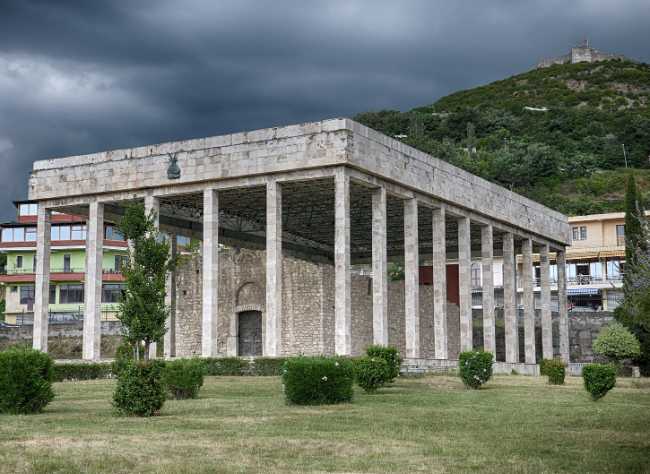
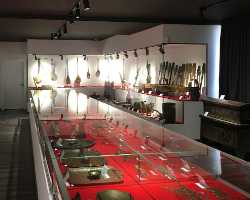
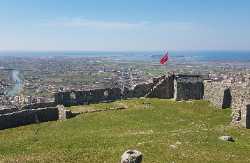
The Skanderbeg Memorial sits in the centre of Lezhë on Rruga Frang Bardhi, right in the historic heart of the town near Skanderbeg Square. It’s the site that marks the burial place of Albania’s national hero, housed in the former church-mosque building. From here the main sights of the city are only a short walk away. The Ethnographic Museum is close by inside the Palace of Culture on the square, and the ruins of ancient Lissus lie just around the area. Higher up the hill, Lezhë Castle offers wide views over the town, the river plain and toward the sea. Everything is compact, so you can move from the memorial to the museum, the ancient remains or the castle without any rush, taking in the different layers of Lezhë’s history.
 Museum
 Castle
 Cathedral
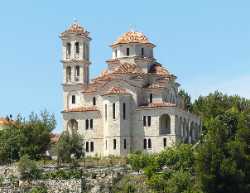 Church
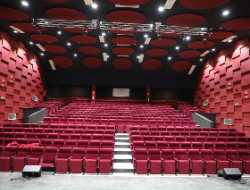 Theatre