Church of St. Demetrius of Salonica
Church of St. Demetrius of Salonica in Bitola is a graceful 19th‑century landmark that reflects the city’s multicultural past. Built in 1830, during a period when Christian churches faced strict Ottoman regulations, it stands out for its unusually tall interior—cleverly achieved by lowering the floor so the building could appear modest from the outside while feeling monumental within. This architectural workaround is one of its most interesting features. Inside, the church is known for its richly carved wooden iconostasis, a masterpiece created by local craftsmen who blended traditional motifs with delicate floral patterns. The icons themselves span different artistic schools, offering a visual timeline of Bitola’s religious art. Visitors often pause before the icon of St. Demetrius, the church’s patron, depicted as a warrior‑saint whose cult was especially strong in the region. Another highlight is the collection of 19th‑century wall paintings, restored to reveal their warm colors and fine detailing. The church also preserves several liturgical objects—silver crosses, embroidered vestments, and old manuscripts—that illustrate the community’s devotion and craftsmanship.
Bitola North Macedonia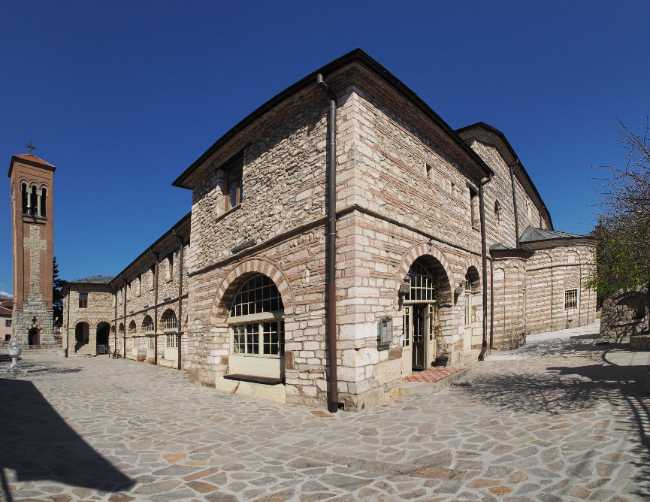
This is the main and biggest Orthodox church in Bitola, you cannot miss it once you are in the center. The Church of St. Demetrius of Salonica is located right in the old town, at 11th of October Street No. 1, Bitola 7000, North Macedonia. It was built in 1830 and is known for its impressive wood-carved iconostasis inside, and its bell tower from 1936 stands right next to it. Because it is so central, everything else is around the corner. Just steps away is the famous Shirok Sokak, the long pedestrian street with cafes and old European facades, and the Clock Tower of Bitola at Magnolia Square. Right nearby is the Magaza Gallery in its old 19th-century building and the Bezisten old covered bazaar. A short walk brings you to the NI Institute and Museum Bitola in the old barracks, the Museum of the Albanian Alphabet, the Art Gallery in the Yeni Mosque, the Isak Celebi Mosque, and the Ataturk Memorial Museum.
 Museum
 Museum
 Museum
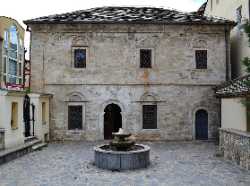 Gallery
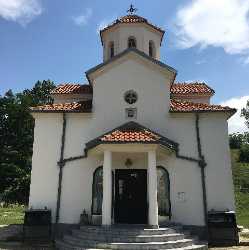 Church
 Church
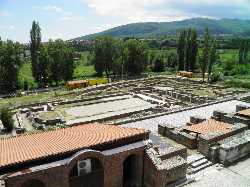 Historical Landmark