Royal Albert Memorial Museum & Art Gallery
The Royal Albert Memorial Museum & Art Gallery (RAMM) in Exeter is one of Devon’s richest cultural landmarks, blending Victorian ambition with global collections. Opened in 1868 and named after Prince Albert, it was designed as a civic museum to inspire learning through art, science and world cultures. Its award‑winning modern refurbishment has preserved the ornate original façade while creating bright, elegant galleries inside. Visitors can explore an impressively wide range of themes. The natural history collection includes a towering giraffe, exotic birds and geological specimens that trace Devon’s prehistoric past. The World Cultures galleries hold remarkable objects from Oceania, Asia and the Americas, including ceremonial masks and finely crafted textiles. RAMM’s archaeology displays reveal Roman Exeter, Saxon craftsmanship and medieval life through coins, pottery and tools. The art galleries present works from the 18th century to today, with highlights such as local landscapes, fine portraiture and changing contemporary exhibitions. One of the museum’s most intriguing features is its time‑trail layout, which encourages visitors to wander through centuries of human and natural history in a single visit. RAMM offers a rare combination of global perspective and local storytelling, making it one of the most engaging museums in the South West.
Exeter United Kingdom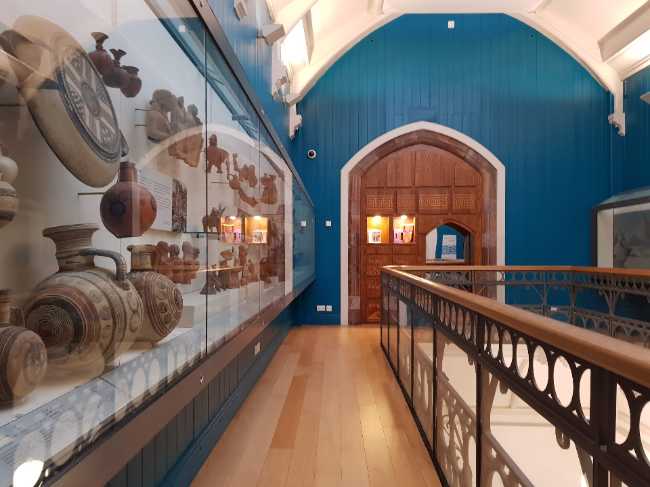
The Royal Albert Memorial Museum & Art Gallery sits right in the middle of Exeter on Queen Street, Exeter, Devon, EX4 3RX. It’s an easy spot to reach, just a short stroll from Exeter Central Station and the main shopping streets, tucked between the city’s old gardens and the busy centre. Step outside and you’re only moments from Rougemont Gardens and the remains of Rougemont Castle, a peaceful green space with bits of the old Norman fortress still standing. Next door are Northernhay Gardens, another lovely spot for a quiet wander among trees and statues. A few minutes’ walk brings you to Exeter Cathedral, with its soaring Gothic vaults and peaceful close, while the city’s medieval Underground Passages offer a chance to explore the old tunnels that once carried water under the streets. Further on you can head down to the Historic Quayside for riverside cafés and walks, or find St Nicholas Priory, one of the city’s oldest surviving buildings. Everything sits close enough that you can potter from the museum to the castle ruins, the cathedral and the gardens without any rush, taking in a bit of history and some fresh air along the way.
 Castle