Brownsea Castle
Brownsea Castle stands on the edge of Poole Harbour, a private and rarely accessible landmark that adds an air of mystery to Dorset’s island landscape. Originally built as a Tudor fort in the 1540s to defend the harbour, it later evolved into an elegant residence, passing through the hands of merchants, aristocrats, and even a wealthy tea‑trading family. Its long history blends military purpose with island tranquillity, making it one of Dorset’s most unusual historic buildings. Inside, visitors who gain access—usually through special tours or events—can explore rooms shaped by centuries of adaptation. The Tudor foundations remain visible in the lower levels, where thick walls and gun ports recall its defensive origins. The upper floors reflect later domestic life, with Georgian and Victorian interiors, panelled rooms, and views across the water that once impressed high‑status guests. The castle’s setting is equally compelling. Surrounded by Brownsea Island’s woodland and wildlife, it sits near habitats famous for red squirrels, seabirds, and quiet coastal paths. The castle gardens, restored with formal planting and sheltered lawns, offer peaceful corners overlooking the harbour.
Poole United Kingdom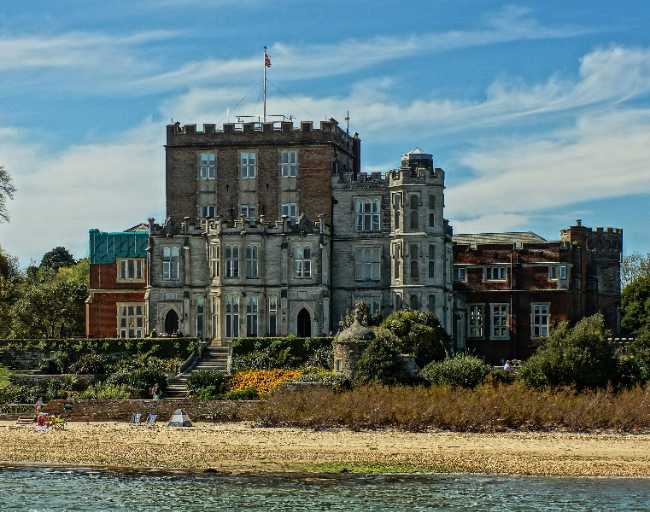
Brownsea Castle sits on the eastern shore of Brownsea Island in Poole Harbour, Dorset, England. Its full postal address is Brownsea Castle, Brownsea Island, Poole Harbour, Dorset, BH13 7EE. Originally constructed by King Henry VIII in the 1540s as a device fort to protect Poole Harbour from French invasion, the castle was later converted into a grand private residence and now operates as a corporate hotel retreat. The island and surrounding harbour area are packed with historical and cultural landmarks to explore. On the island itself, visitors can discover the historic Scout Camp site where Lord Baden-Powell held the very first experimental Scouting camp in 1907. The surrounding nature reserve, managed by the National Trust and Dorset Wildlife Trust, is famous as one of the few remaining havens for native red squirrels alongside a massive coastal lagoon filled with rare sea birds. Taking a short ferry ride back to the mainland opens up several more historical sites. Right across the water at the harbor entrance lies the historic town of Poole, home to Poole Museum and the ancient Scaplen’s Court Museum and Garden, which showcases life in the region through medieval times. Heading south toward the Isle of Purbeck leads to the dramatic ruins of Corfe Castle, an ancient hilltop fortress, as well as Swanage Pier and the Victorian seafront.
 Museum