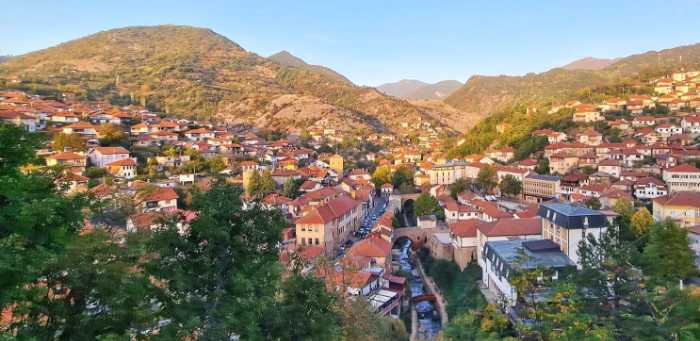
Kratovo
Kratovo is one of North Macedonia's most picturesque historic towns, nestled within the crater of an extinct volcano in the country's northeast. Famous for its medieval stone towers, graceful bridges and narrow cobbled streets, Kratovo has a history dating back to antiquity. Rich deposits of gold, silver and other minerals made it an important mining center during Roman, Byzantine, Serbian and Ottoman times, and much of that heritage can still be explored today. The town's principal cultural institution is the Kratovo Museum, operated by the National Institution Museum of North Macedonia. Its collections include archaeological discoveries, ethnographic exhibits, mining artifacts and historical documents that tell the story of Kratovo's development over many centuries. Visitors interested in local history can also explore exhibitions inside the historic Simikj House, where displays present traditional life, architecture and crafts of the region. Art exhibitions and cultural events are regularly hosted in the House of Culture Kratovo Gallery, providing another venue where visitors can experience local artistic heritage. Overlooking the town are the remains of Kratovo Fortress, also known as Hisar Fortress. Built on a rocky hill above the volcanic valley, the medieval castle once protected the prosperous mining settlement. Although only parts of its defensive walls survive, the site offers magnificent panoramic views across Kratovo's distinctive landscape of stone houses, towers and bridges. One of the town's most important religious monuments is the Cathedral Church of Saint Nicholas, an Orthodox church admired for its beautiful iconostasis and historic significance. Other notable churches include the Church of Saint John the Baptist and the Church of the Holy Trinity, both reflecting the rich spiritual heritage of the region. Kratovo is especially famous for its remarkable medieval stone towers, including the Saat Tower, Emin Bey Tower and Simić Tower, which once served as residences for wealthy merchants and noble families. Equally impressive are the historic stone bridges spanning the deep river gorge that cuts through the town. The Radin Most, Grofchanski Bridge and Argulichki Bridge are among the best preserved and remain enduring symbols of Kratovo. Walking through the old streets reveals traditional Ottoman-era houses, narrow alleyways and charming squares that have changed little over the centuries. Combining fascinating museums, a medieval fortress, historic churches and unique volcanic scenery, Kratovo offers one of the most authentic cultural experiences in North Macedonia. From discovering the Kratovo Museum and climbing to the fortress to crossing centuries-old stone bridges and exploring the town's remarkable architecture, visitors are rewarded with an unforgettable journey through one of the country's best-preserved historic settlements.
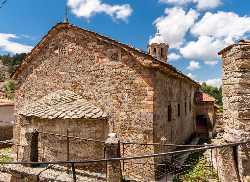 Church
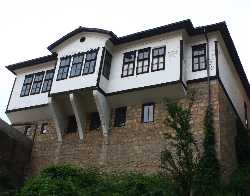 Museum
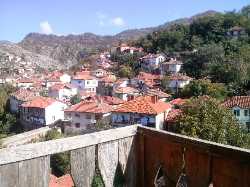 Tower
Tower
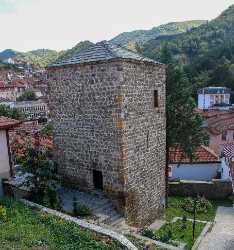 Tower
Tower
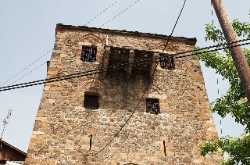 Tower
Tower