Church of St. George
Church of St. George in Kėdainiai is one of the town’s oldest surviving churches, standing as a quiet witness to centuries of religious and cultural change. Originally built in the 15th century, it is closely linked to the Grand Duchy of Lithuania’s early Christianisation period. An interesting fact is that the church once belonged to the Carmelites, whose presence shaped local education and spiritual life. Despite fires, wars, and political upheavals, the building has retained much of its historic character. Inside, the church offers a serene, atmospheric space marked by soft light and restrained decoration. The main altar, dedicated to St. George, features expressive sculptures and traditional wooden craftsmanship typical of Lithuanian sacred art. Side altars display devotional paintings that reflect different artistic periods, while fragments of older frescoes hint at the church’s medieval origins. Visitors can also admire the vaulted ceiling and the modest yet elegant organ loft, which adds to the church’s intimate charm. Together, these elements create a space where history and spirituality blend naturally.
Kėdainiai Lithuania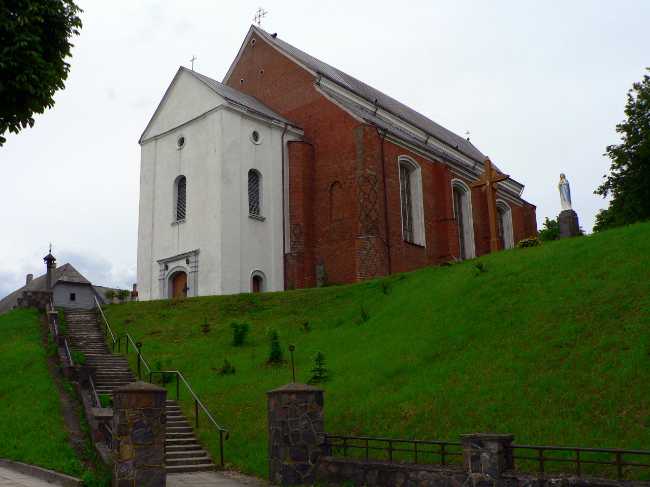
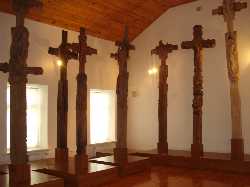
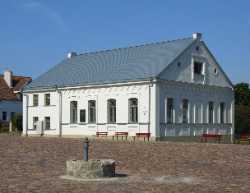
The Church of St. George stands on Šėtos Street in Kėdainiai Old Town, one of only four preserved Old Towns in Lithuania. Built in the 15th century as a Gothic basilica, it is among the oldest brick churches in the region. The church was later rebuilt in 1840 after periods of damage and change. Originally Lutheran, it was handed over to the Roman Catholic community in 1627 and remains an active parish church today, with Mass held on Sundays. Its tall, austere brick facade and Gothic arches reflect the medieval character of Kėdainiai’s historic center. The church is surrounded by the town’s main heritage sites, all within a short walk. Great Market Square and Didžioji Street lie just south, lined with 17th-century merchant houses and the former Town Hall. Nearby on Senoji Street is the Renaissance Evangelical Reformed Church, funded by the Radvila family in 1631, which houses the Mausoleum of the Dukes Radvila in its crypt. On Radvilų Street you’ll find St. Joseph’s Church, a striking 18th-century wooden Jesuit church, and the Arnett House Traditional Crafts Centre, set in a 17th-century Scottish merchant residence where artisans demonstrate weaving and pottery. The Multicultural Centre, located in a 19th-century former “winter synagogue” on Old Market Square, presents exhibitions on Kėdainiai’s Jewish history. The Kėdainiai Regional Museum, based in a former Carmelite monastery, displays archaeology, folk art, and elaborately carved crosses.
 Museum
Multicultural Centre
Museum
Multicultural Centre
 Museum
Janina Monkutė-Marks Museum
Museum
Janina Monkutė-Marks Museum
 Museum
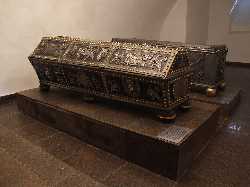
Mausoleum of the Radziwiłł Dukes
Museum
Mausoleum of the Radziwiłł Dukes
 Museum
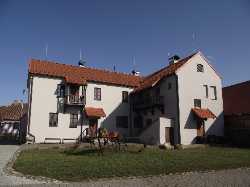
Tradicinių amatų centras Arnetų name
Museum
Tradicinių amatų centras Arnetų name
 Museum
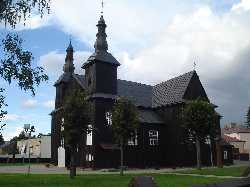
Kėdainiai Church of St. Joseph
Museum
Kėdainiai Church of St. Joseph
 Church
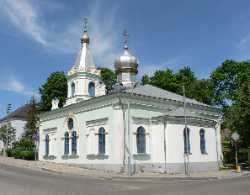
Kėdainiai Orthodox Church of the Transfiguration
Church
Kėdainiai Orthodox Church of the Transfiguration
 Church
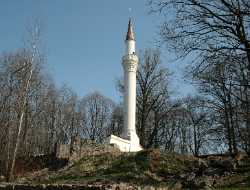
Kėdainiai Minaret
Church
Kėdainiai Minaret
 Historical Landmark
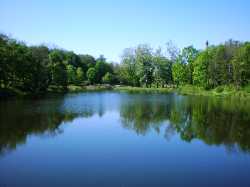
Kėdainiai City Park
Historical Landmark
Kėdainiai City Park
 Park
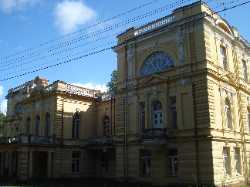
Apytalaukis Manor
Park
Apytalaukis Manor
 Manor
Manor