Observatorium Gornergrat
Kapelle Schwarzsee’s counterpart on the opposite side of Zermatt’s high alpine world is the Gornergrat Observatory, a landmark where science meets scenery at 3,100 meters. Opened in 1908 and later expanded, it became one of Europe’s earliest high‑altitude research stations, prized for its clear skies and minimal light pollution. Today it forms part of the Kulmhotel complex, giving visitors a rare chance to stand inside a historic scientific site while surrounded by glaciers. Inside, the most striking features are the twin domes, once housing powerful telescopes used to study solar activity and cosmic radiation. Although active research has moved elsewhere, the domes remain intact, and their interiors reveal the elegant mechanics that allowed astronomers to track the night sky with precision. The observatory also contains exhibition spaces explaining early alpine astronomy, the challenges of operating instruments in extreme cold, and the discoveries made here during the 20th century. A highlight is the panoramic hall, where large windows frame the Monte Rosa massif, the Gorner Glacier, and the Matterhorn. Standing here feels like being inside a lookout built for both scientists and dreamers.
Zermatt Switzerland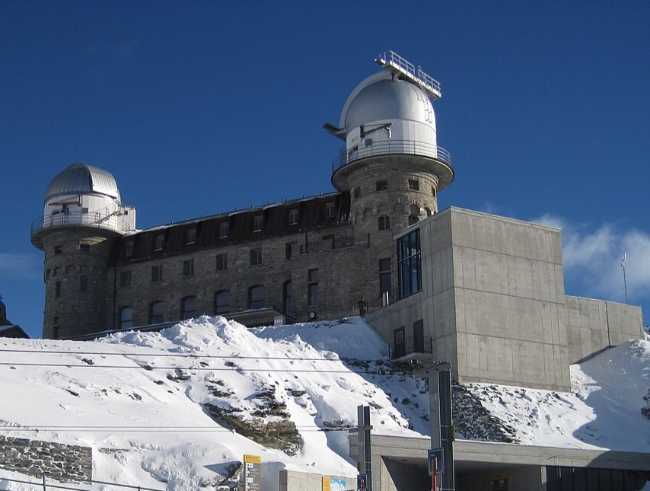
The Gornergrat Observatory stands on the rocky summit ridge of Gornergrat, above Zermatt in the Swiss canton of Valais. At around 3,100 metres, it is one of the highest astronomical observatories in the Alps, perched beside the historic Kulmhotel Gornergrat and the terminus of the Gornergrat Railway. The observatory complex crowns the ridge between the Gorner Glacier and the Findel Glacier, offering uninterrupted panoramic views across the Pennine Alps. The summit area is compact but rich in highlights. A short walk from the station leads to the 3100 viewing platform with its dramatic Matterhorn panorama, while the Gornergrat Chapel “Bernhard von Aosta” provides a quiet spiritual space amid the mountain scenery. Hikers can follow trails toward the Riffelsee, a small lake famous for Matterhorn reflections, or continue to the 5‑Lakes Walk, which connects several alpine tarns with different viewpoints. The ridge also offers access to ski slopes and snow tours in winter, and to high‑altitude hiking routes in summer. Below, the Gorner Gorge and the village of Zermatt with its museums, churches and car‑free centre are easily reached by train, making the observatory a natural focal point for excursions into the upper Matter Valley.
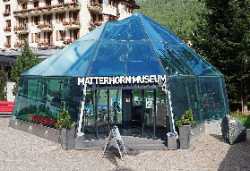 Museum
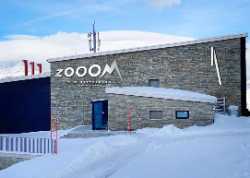 Museum
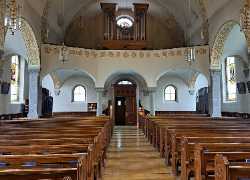 Church
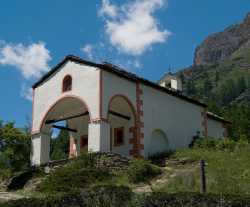 Church
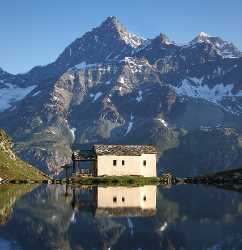 Chapel