Škofja Loka Castle
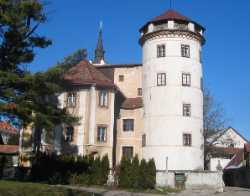
Škofja Loka Castle rises above the old town like a guardian of its thousand‑year story. First mentioned in 1202 and long owned by the powerful Freising bishops, it is one of Slovenia’s best‑preserved medieval fortifications. An interesting fact: the castle owes its current shape to a major reconstruction after the 1511 earthquake, which reshaped much of the region. Its thick walls and irregular layout still reflect centuries of defensive adaptation. Inside, the castle houses the Škofja Loka Museum, a richly curated journey through local history, crafts, and art. Visitors can explore medieval weapons, traditional guild tools, and finely carved wooden objects that reveal the town’s artisanal heritage. The ethnological section recreates rural interiors from the surrounding valleys, while the art collection includes Gothic sculptures and paintings tied to the region’s religious traditions. One highlight is the castle’s chapel, decorated with delicate frescoes and offering a quiet moment amid the museum’s many exhibits. Another is the panoramic terrace, where views stretch across the red roofs of Škofja Loka and into the hills of the Poljane and Selca valleys. The castle feels both intimate and monumental—a place where the layers of Upper Carniola’s past remain vividly present.
Škofja Loka Slovenia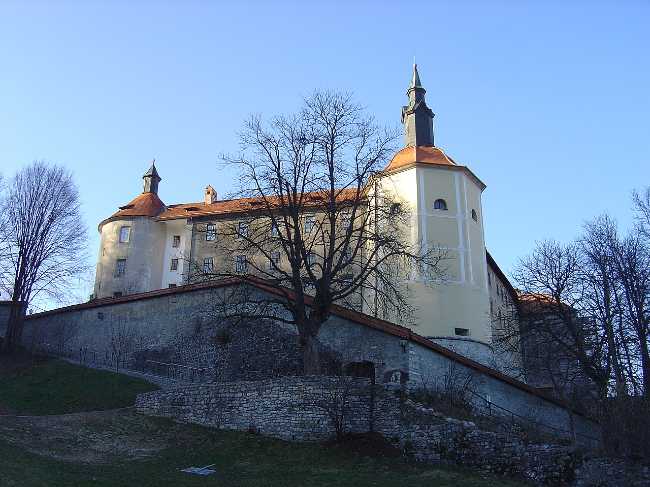
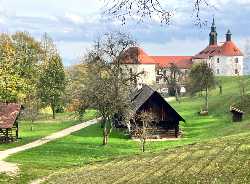
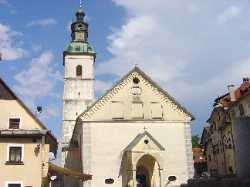
Škofja Loka Castle sits on a hill overlooking the medieval town of Škofja Loka, one of Slovenia’s most charming historic towns. Built in the early 13th century by the bishops of Freising, the castle once served as the administrative center of their vast estate. Today it houses the Škofja Loka Museum, with collections covering local archaeology, history, art, and ethnology. Right below the castle lies the old town center, reached by a short walk downhill. Mestni trg, the main square, is lined with colorful burgher houses, shops, and cafes that reflect the town’s medieval and baroque heritage. At the edge of town, the Capuchin Bridge crosses the Selca Sora River. Dating to the 14th century, it’s one of the oldest preserved stone bridges in central Europe and a popular photo spot. Nearby you’ll also find the Church of St. Jacob with its rich baroque interior, and the Granary, a striking historic building now used for cultural events. A few minutes’ walk away is the Škopar House Open-Air Museum, an authentic 16th-century peasant home showing traditional rural life in the region. For a bit of nature, riverside paths and forest trails lead into the Škofja Loka Hills, ideal for easy walks. Together, the castle and its surroundings offer a perfect mix of history, culture, and Alpine foothill scenery.
 Museum
 Castle
 Church