Hugo Wolf Museum
Hugo Wolf Museum in Slovenj Gradec is a beautifully curated tribute to one of the most influential late‑Romantic composers of German‑language art songs. Born in the town in 1860, Hugo Wolf became a master of the Lied, known for his intense emotional expression and innovative harmonies. An interesting fact: despite his international fame, Wolf remained deeply connected to Slovenj Gradec, and the museum stands near the site of his childhood home. Inside, the museum offers an intimate journey through Wolf’s life and creative world. Original manuscripts, letters, and personal belongings reveal the composer’s passionate temperament and his close relationships with poets whose texts he set to music. Visitors can explore listening stations featuring his most celebrated song cycles, allowing the delicate interplay of voice and piano to fill the historic rooms. A highlight is the reconstructed study, arranged with period furniture to evoke the environment in which Wolf composed. Photographs, early editions of his works, and rare recordings deepen the experience, while multimedia displays explain his musical innovations in an accessible way.
Slovenj Gradec Slovenia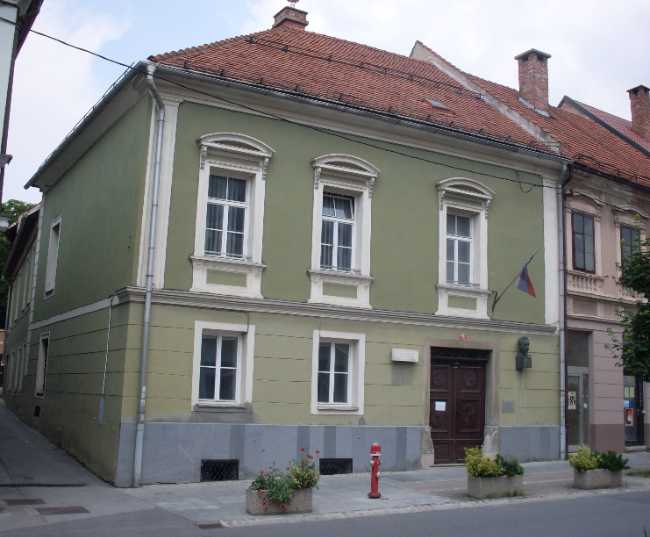
The Hugo Wolf Museum is located in the old town center of Slovenj Gradec, a historic town in Slovenia’s Carinthia region. The museum is housed in the composer’s birth house on Glavni trg, the main square. Hugo Wolf, the renowned 19th-century composer of art songs, was born here in 1860. The carefully restored townhouse presents a memorial collection with period furniture, family documents, photographs, and personal items that trace Wolf’s life and work. Stepping out of the museum, you are immediately on Glavni trg, the town’s main square lined with cafes, shops, and historic buildings. A short walk away is the Parish Church of St. Elizabeth, a Gothic church with baroque altars and a striking bell tower. The old town’s streets and squares preserve the medieval layout and are pleasant for exploring on foot. Nearby is the Slovenj Gradec Art Gallery, which hosts contemporary art exhibitions and reflects the town’s role as a UNESCO Messenger of Peace city. The Carinthian Regional Museum’s main premises are also on the square, with archaeology and ethnology collections and the Jože Tisnikar art collection. For nature, the Mislinja River runs through town with walking paths along its banks. The surrounding Pohorje hills and Uršlja Gora offer hiking and cycling trails, and in winter, nearby ski areas. A short drive takes you to Dravograd and the scenic Drava River valley.
 Museum
 Museum
 Castle
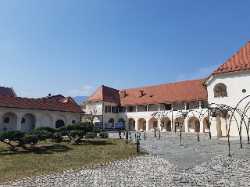 Mansion
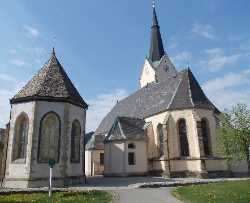 Church