Jewry Wall Museum
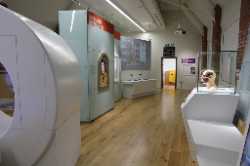
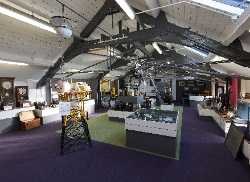
Jewry Wall Museum offers one of the most vivid encounters with Roman Leicester, centred on the towering Jewry Wall itself—one of the largest surviving pieces of Roman masonry in Britain. Dating from the 2nd century, the wall once formed part of a grand public bath complex. Its sheer height and honey‑coloured stone make it an unforgettable landmark, a rare structure that has stood through nearly two millennia of urban change. Inside the museum, recently refurbished galleries explore Leicester’s ancient past through archaeology and storytelling. The Roman Leicester displays include mosaics, pottery, tools, jewellery, and everyday objects excavated from the surrounding area. These artefacts reveal how people lived, worked, and worshipped in the Roman town of Ratae Corieltavorum. A reconstructed Roman bathhouse model helps visitors imagine the original scale and layout of the site. The museum also covers Leicester’s prehistoric and medieval history, with exhibits on Iron Age settlements, Saxon craftsmanship, and early urban life. Interactive elements and detailed reconstructions make the experience accessible and engaging.
Leicester United Kingdom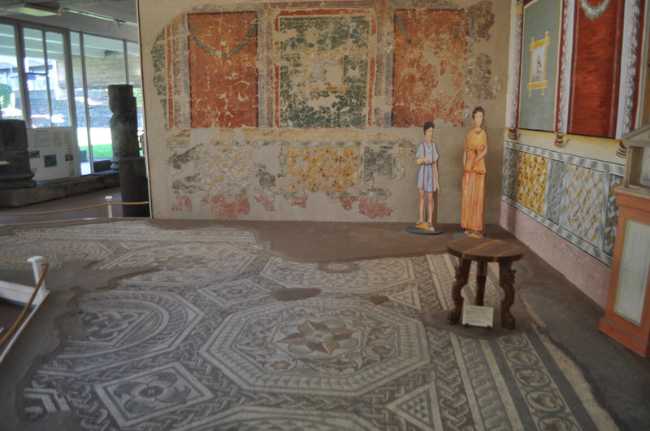
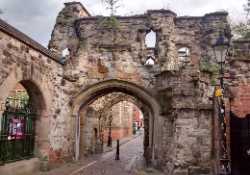
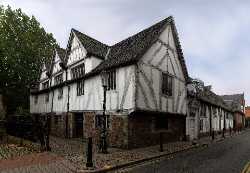
The Jewry Wall Museum stands beside one of Britain’s largest surviving pieces of Roman civil masonry. The towering stone wall was originally part of the public baths complex of Roman Leicester, known as Ratae Corieltaurorum. The accompanying museum highlights Leicester's rich history from prehistory through the Roman era, showcasing intricate mosaic floors, painted wall plaster, and ancient artifacts. It is located on the western side of the city center. The full address is 156 St Nicholas Circle, Leicester, LE1 4LB. Because of its central location, you are surrounded by a variety of key historic sights within a short walk. Right across the road stands St Nicholas Church, one of the oldest churches in Leicester, incorporating recycled Roman brick into its walls. Just a few minutes' walk east brings you to Leicester Cathedral and the popular King Richard III Visitor Centre, where you can learn about the monarch's life, death, and dramatic archaeological discovery. Adjacent to the cathedral is the Leicester Guildhall, a remarkably preserved timber-framed medieval building from the 14th century. Heading slightly south along the River Soar leads you to the ancient Leicester Castle precinct, Castle Gardens, and the Church of St Mary de Castro. Nearby, you will also find the Newarke Houses Museum, which explores local social and military history inside two Tudor buildings, and the Leicester Museum & Art Gallery further east along New Walk.
 Castle
 Museum
 Museum
 Museum
 Museum
 Museum
 Museum
 Museum
 Museum