Kalmar Castle
Kalmar Castle stands as one of Sweden’s most iconic fortresses, rising dramatically above the water at the edge of Kalmar’s historic centre. With origins in the 12th century and its golden age during the Vasa era, the castle reflects centuries of political power, royal ambition, and architectural refinement. Its towers, thick walls, and moat evoke its defensive past, while the Renaissance interiors reveal a world of courtly life, grand halls, and carefully restored chambers. Visitors can explore exhibitions that trace the castle’s role in Nordic history, including the Kalmar Union and Sweden’s early monarchy. Surrounded by parkland and overlooking the strait toward Öland, Kalmar Castle remains both a cultural landmark and a living museum, offering an atmospheric journey into Sweden’s medieval and Renaissance heritage.
Kalmar Sweden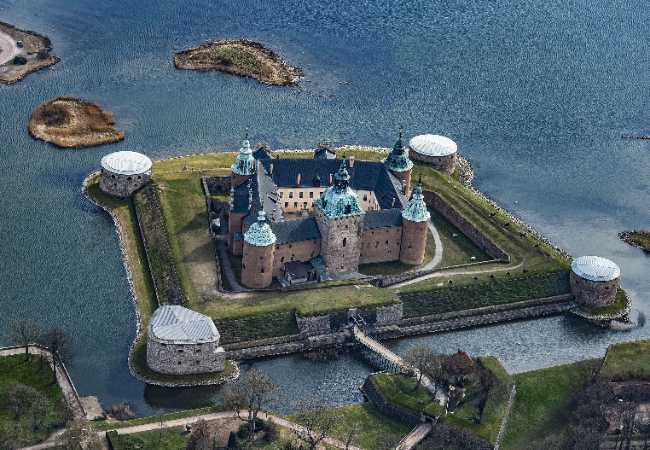
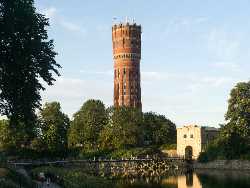
Kalmar Castle stands in the heart of Kalmar, on the eastern edge of the city centre, by the waters of the Baltic Sea and the approach to Öland. It sits just off Kungsgatan, within easy walking distance of the main square Stortorget and the city’s historic core. Right next to the castle is Kalmar City Park, a well‑kept public park with lawns, flower beds, and unusual trees that makes a pleasant green space for a stroll or a picnic after visiting the fortress. The park also borders the Kalmar Art Museum, a striking black‑cube‑style building with large windows facing the water where visitors can combine castle history with contemporary exhibitions. Within a short walk are several other attractions, including Kalmar Cathedral with its baroque interior and the 17th‑century pulpit by Baltzar Hoppenstedt. The old town quarter, with its cobbled streets and preserved 17th‑ and 18th‑century buildings, lies just inland and is ideal for a historic walk before or after exploring the castle. Nearby cultural sites such as the Krusenstierna Garden and the Kalmar County Museum add further layers of history and green space within a compact, walkable area.
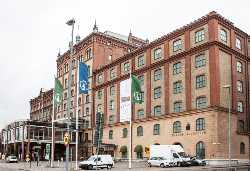 Museum
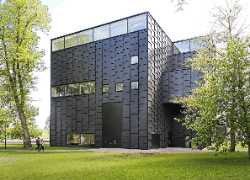 Museum
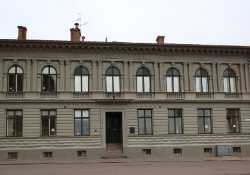 Museum
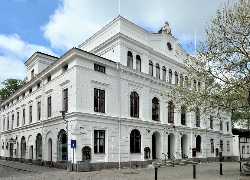 Theatre
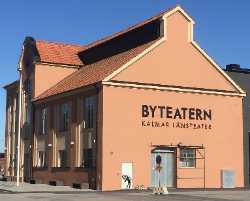 Theatre
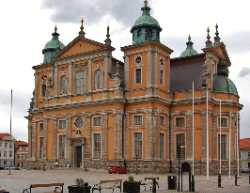 Cathedral
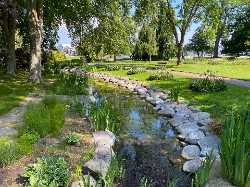 Park
Park
 Historical Landmark
 Park
Park