Basilica of the Holy Cross
The Basilica of the Holy Cross in Kežmarok is one of the most impressive Gothic churches in the Spiš region, a landmark that reflects the town’s medieval prosperity and strong religious traditions. Built in the 14th century and later expanded, it stands out for its massive stone walls and elegant tower, which once served as a lookout over the trade routes leading toward Poland. An interesting fact is that the basilica preserves one of the oldest church roofs in Slovakia, a rare medieval structure that survived several town fires. Inside, the church reveals a rich ensemble of Gothic and Renaissance art. The main altar, with its expressive sculptures and painted panels, is a highlight, while the side chapels contain tombstones of Kežmarok’s noble families. The Baroque organ, known for its warm tone, still accompanies concerts and liturgical celebrations. Visitors can also admire fragments of medieval wall paintings and a beautifully carved pulpit that reflects the craftsmanship of local artisans.
Kežmarok Slovakia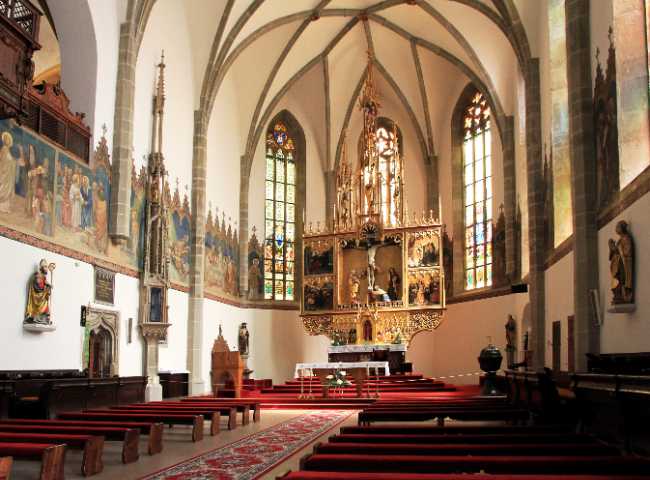
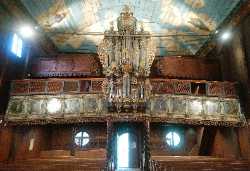
The Basilica of the Holy Cross (Bazilika Povýšenia svätého Kríža) is a Roman Catholic Gothic church located at Kostolné námestie 407/20 (Church Square) in the historic center of Kežmarok, in the Spiš region of eastern Slovakia. The basilica was built in the 14th century on the site of an older Romanesque chapel from the 13th century, and is one of the newest and largest Gothic three-nave churches in the Spiš region. In the proximity is Starý trh (Old Market), the oldest populated part of the town with restored 13th-century houses, which you can easily walk to through a nearby street. To the south of the Basilica you will find the town hall with its distinctive tower – a characteristic symbol of Kežmarok that serves as an administrative institution today. In front of the town hall stands the historic Cage of Embarrassment, which was used in the past as punishment for criminals to be seen by the whole society. Just a short walk away is the UNESCO-listed Wooden Articular Church of the Holy Trinity, a unique 17th-century Protestant wooden church built without any metal components. Opposite the wooden church stands the majestic New Evangelical Church (Red Church) with its distinctive red and green facade, built between 1872-1894 in an eclectic style combining Byzantine, Romanesque, Renaissance, and oriental elements.
 Museum
 Castle
 Historical Landmark
 Church
 Theatre