Monastery and Interlaken Castle
The Monastery and Interlaken Castle form one of the town’s most atmospheric historic ensembles, tracing over eight centuries of local life. Founded around 1130 as an Augustinian monastery, the complex once controlled vast Alpine lands and welcomed pilgrims traveling through the Bernese Oberland. After the Reformation, it transformed into an administrative seat, giving the site its unusual blend of sacred and civic architecture. Inside, the highlight is the cloister, a peaceful arcaded courtyard where medieval stonework and carved capitals reveal the monastery’s early craftsmanship. The former chapter house often hosts cultural events, allowing visitors to experience its acoustics and historic atmosphere. In the castle wing, restored rooms display heraldic motifs and period furnishings that illustrate the building’s later role as a regional government center. One of the most interesting features is the preserved Gothic window, whose delicate tracery contrasts with the fortress‑like exterior. The small museum area explains monastic daily life, agricultural traditions, and the political shifts that reshaped Interlaken after 1528.
Interlaken Switzerland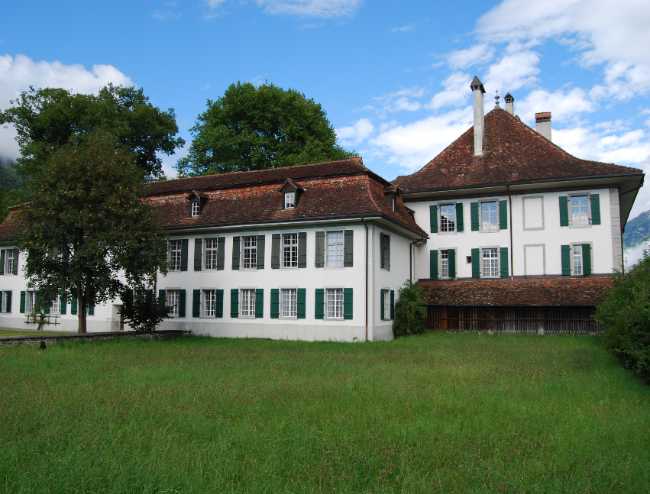
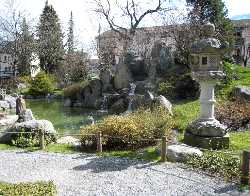
The Monastery and Interlaken Castle are located in the heart of Interlaken, between the Höhematte park and the Japanese Garden, with the historic complex set along Schloss 1 in the town center. This former Augustinian monastery dates back to the 12th century and today serves as an important historic landmark, with the buildings used for local administrative offices. The location is ideal for sightseeing because several of Interlaken’s main attractions are within easy walking distance. Nearby, visitors can enjoy the Höhematte, a large open park with views toward the mountains, as well as the charming streets of Unterseen, which preserve a more traditional old-town atmosphere. From here, it is also easy to reach the Aare River area, the central promenade, and the main shopping and café district of Interlaken. For a broader day out, travelers often combine the monastery and castle with excursions to Harder Kulm, Lake Thun, Lake Brienz, or the Jungfrau region.
 Museum
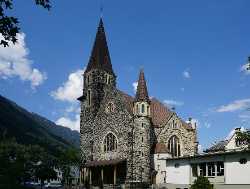 Church
 Theatre
 Park
Park
 Park
Park