Reformierte Schlosskirche
The Reformierte Schlosskirche is one of Interlaken’s most atmospheric landmarks, a church that blends medieval origins with the clarity and simplicity of Reformed design. Built in the 12th century as part of the Augustinian monastery complex, it later became a Protestant church after the Reformation—an evolution still visible in its architecture. The exterior, with its sturdy stone walls and slender tower, reflects centuries of adaptation rather than a single stylistic moment. Inside, the church is defined by calm proportions and soft natural light. The most striking feature is the Romanesque nave, where thick pillars and rounded arches preserve the building’s earliest character. The Gothic choir adds a later layer, its pointed windows creating a gentle interplay of shadow and brightness. The Reformed interior is intentionally restrained: whitewashed walls, simple wooden seating, and a focus on clarity rather than ornament. A highlight is the historic pulpit, carved in the 17th century and symbolizing the central role of preaching in Protestant worship. Visitors also notice fragments of medieval frescoes—rare survivors that hint at the church’s pre‑Reformation past.
Interlaken Switzerland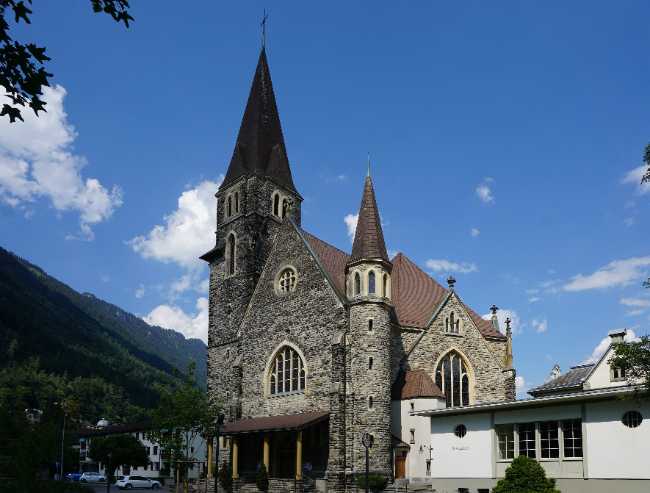
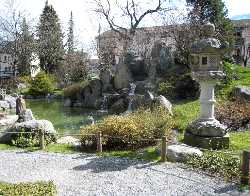
Reformierte Schlosskirche in Interlaken is located on Schloss 7, close to the town center and at the edge of the green Höhematte park. It is one of the oldest buildings in Interlaken and remains an important historic and religious landmark in the resort town. The church’s setting is especially attractive because it sits in a quiet area but still very close to the main sights. Nearby, visitors can enjoy Höhematte, the Japanese Garden, and the central promenade along Höheweg, which are all pleasant places for a walk. From here, it is easy to reach Interlaken West and Interlaken Ost stations, as well as the town’s shops, cafés, and riverside paths. It also works well as part of a larger sightseeing day that includes the Monastery and Interlaken Castle, Harder Kulm, and trips toward Lake Thun, Lake Brienz, or the Jungfrau region.
 Museum
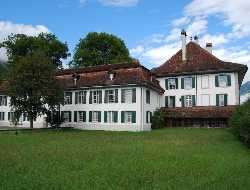 Monastery
 Theatre
 Park
Park
 Park
Park