Museum of the Crișurilor's Country
Museum of the Crișurilor’s Country is one of Oradea’s richest cultural institutions, housed in the beautifully restored Baroque Palace of the Bishopric. Its collections span archaeology, ethnography, natural history, and art, offering a deep look into the Criș region’s past. An interesting fact is that the museum preserves one of Romania’s most important prehistoric artefact groups: tools and ceramics from the Neolithic settlements along the Criș rivers, displayed with clear contextual reconstructions. Inside, visitors can explore rooms dedicated to traditional rural life, featuring embroidered textiles, wooden household objects, and folk costumes that reveal the area’s multicultural heritage. The natural history section is a favourite, with detailed dioramas of local fauna and a notable mineral collection. Another highlight is the numismatics hall, where coins and medals trace centuries of trade and political change. The art galleries present works by Romanian and Central European painters, including portraits and landscapes that capture the region’s identity. Temporary exhibitions frequently add fresh perspectives, from photography to contemporary crafts. The palace itself enhances the experience: vaulted halls, restored stucco, and elegant staircases make the museum both a cultural and architectural delight.
Oradea Romania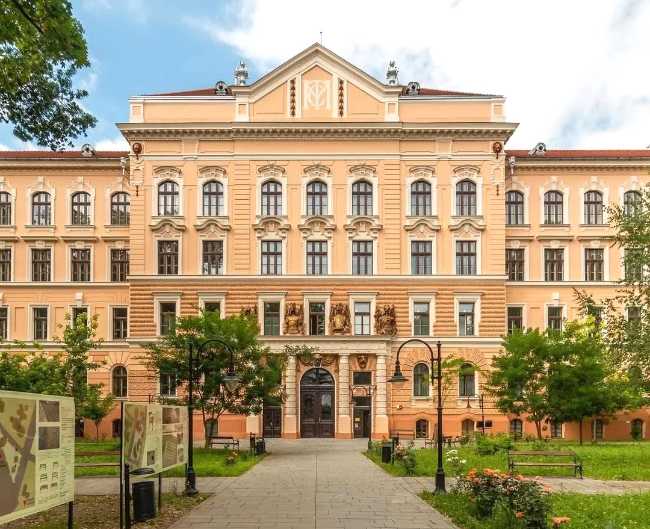
The Museum of the Crișurilor Country, Muzeul Țării Crișurilor, is located in Oradea on Strada Armatei Române, inside the former Cadets’ School and later the Garrison building. The museum moved here in 2017 after a major restoration of the 19th-century complex, which now offers large exhibition halls around inner courtyards. It is the main regional museum for Bihor County and covers archaeology, history, ethnography, natural sciences, and art. Highlights include Dacian and Roman artifacts, medieval exhibits, traditional costumes and folk art from Crișana, a natural history section with local fauna, and a fine arts gallery with Romanian and European works. There is also a vivarium and temporary exhibition spaces. The building itself is an attraction, with its long neoclassical façade and restored interiors. Its location puts you close to central Oradea. The museum is about a 10–15 minute walk from Piața Unirii, the city’s main square, known for its secession and art nouveau architecture. There you’ll find the Moon Church with its unique clock mechanism, the Roman Catholic Basilica and Bishop’s Palace, the Black Eagle Palace with its stained-glass passage, and the City Hall tower with panoramic views. The State Theatre and the Zion Neolog Synagogue are also nearby. The Crișul Repede river runs through the city center and has a scenic promenade with cafes and terraces.
 Museum
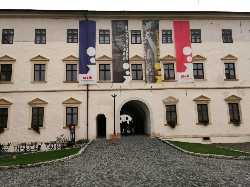
Darvas-La Roche House
Museum
Darvas-La Roche House
 Museum
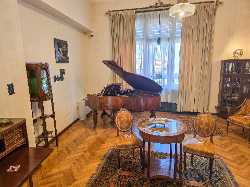
Jewish History Museum
Museum
Jewish History Museum
 Museum
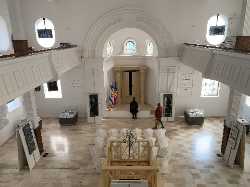
Ady Endre Memorial Museum
Museum
Ady Endre Memorial Museum
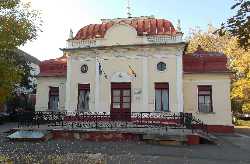 Museum
Iosif Vulcan Memorial Museum
Museum
Iosif Vulcan Memorial Museum
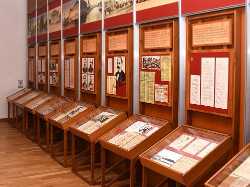 Museum
Military Museum Oradea
Museum
Military Museum Oradea
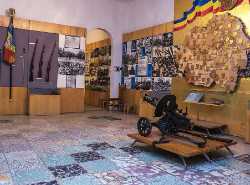 Museum
 of Freemasonry
Museum
Museum of Freemasonry
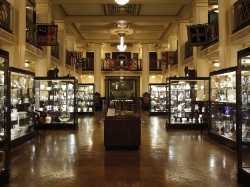 Museum
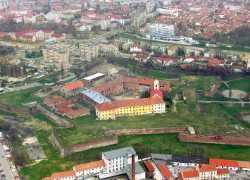
Oradea Fortress
Museum
Oradea Fortress
 Fortress
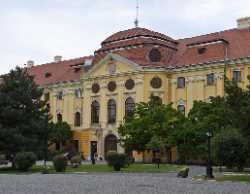
Palatul Episcopiei Romano-Catolice
Fortress
Palatul Episcopiei Romano-Catolice
 Museum
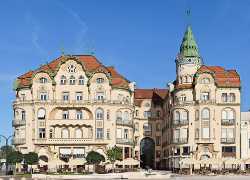
Black Eagle Palace
Museum
Black Eagle Palace
 Palace
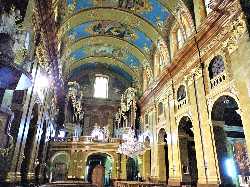
Roman Catholic Basilica of St. Mary
Palace
Roman Catholic Basilica of St. Mary
 Cathedral
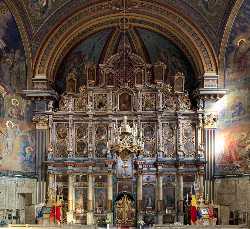
Moon Church
Cathedral
Moon Church
 Cathedral
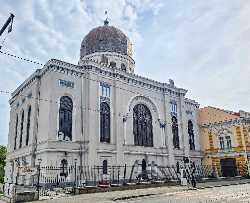
Zion Neolog Synagogue
Cathedral
Zion Neolog Synagogue
 Synagogue
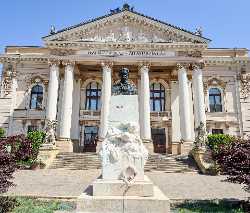
Oradea State Theatre
Synagogue
Oradea State Theatre
 Cathedral