Duke's Palace
The Duke’s Palace is one of Zadar’s most atmospheric historical buildings, a place where centuries of political power, Venetian influence, and local identity intersect. Originally part of a medieval defensive complex, it was reshaped during Venetian rule into the seat of the city’s provveditore, giving it the elegant civic character it retains today. One of the most interesting facts is that the palace once formed a continuous architectural unit with the nearby City Loggia and the Bishop’s Palace, creating a triad of authority: civic, religious, and administrative. Over time, earthquakes, wars, and renovations altered its appearance, but fragments of Gothic and Renaissance stonework still survive inside. Visitors entering the restored interior can see the historic council hall, where decisions shaping Zadar’s maritime trade and urban life were once made. The palace also hosts cultural exhibitions, often highlighting archaeology, contemporary art, or the city’s Venetian heritage. Look for the preserved stone portals and carved coats of arms, which reveal the families and officials who governed the city. A lesser‑known detail is the palace’s role during the 19th century, when it briefly served military functions under Austrian rule before returning to civic use.
Zadar Croatia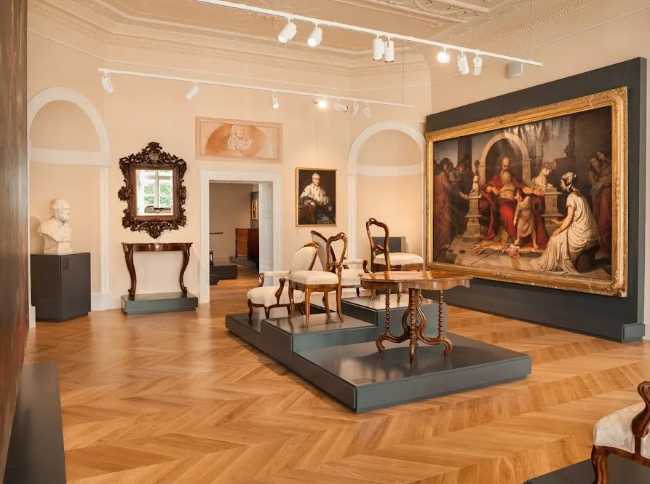
Duke's Palace, or Knezeva Palaca, is located in the very heart of Zadar's historic old town. You will find it in the central part of the peninsula, just a short walk from both the ancient Roman Forum and the waterfront. The palace itself is a beautiful example of medieval and Renaissance architecture, once the residence of the city rulers during Venetian times, and today it is part of the National Museum Zadar. Because it sits right in the old centre, you are surrounded by attractions. Right next to it is the Church of St. Anastasia, the large Romanesque cathedral with a bell tower you can climb for a view over the whole town and the islands. On the other side is the famous Church of St. Donatus and the remains of the Roman Forum, where locals sit on ancient stones as if it were a normal square. A minute away is Narodni trg, the People's Square, the lively living room of the city with the old City Guard building, the City Loggia and plenty of cafes. From the palace you can easily walk to the waterfront to see the Sea Organ, where the sea plays music through pipes under the promenade, and the Greeting to the Sun light installation. The entire old town is compact, so everything is within a few minutes on foot.
 Museum
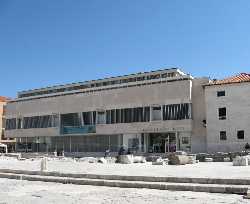
 of Ancient Glass
Museum
Museum of Ancient Glass
 Museum
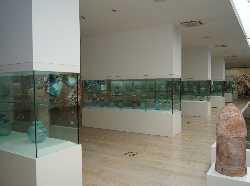
Mali Arsenal
Museum
Mali Arsenal
 Museum
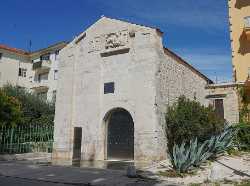
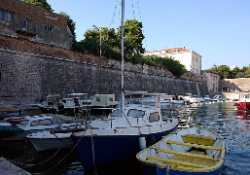
Zadar City Walls
Museum
Zadar City Walls
 Historical Landmark
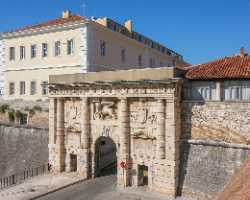
Land Gate
Historical Landmark
Land Gate
 Historical Landmark
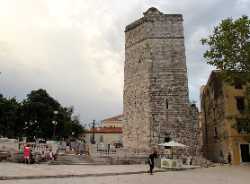
Captain's Tower
Historical Landmark
Captain's Tower
 Tower
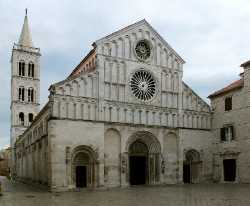
Cathedral of St. Anastasia
Tower
Cathedral of St. Anastasia
 Cathedral
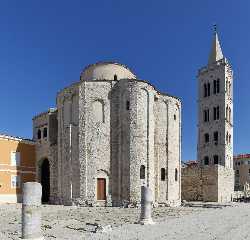
Church of St. Donatus
Cathedral
Church of St. Donatus
 Church
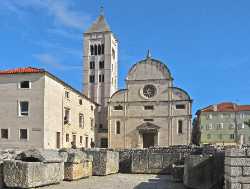
 of St. Mary
Church
Church of St. Mary
 Church
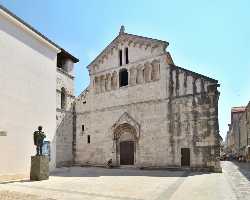
 of St. Chrysogonus
Church
Church of St. Chrysogonus
 Church
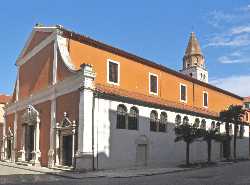
 of St. Simeon
Church
Church of St. Simeon
 Church