Cathedral of Christ the Saviour
The Cathedral of Christ the Saviour is one of Banja Luka’s most striking landmarks, rising in red‑and‑yellow stone that glows warmly in the sun. Originally completed in 1939, it was destroyed during the Second World War and rebuilt decades later with meticulous attention to its original Serbian‑Byzantine design. This blend of loss and revival gives the cathedral a symbolic weight: it stands not only as a place of worship but as a testament to the city’s resilience. Inside, visitors are greeted by a soaring dome decorated with vivid frescoes depicting scenes from Orthodox tradition. The iconostasis, carved from fine wood and gilded with gold leaf, is one of the cathedral’s most impressive features. Its icons, painted by contemporary Serbian artists, combine classical techniques with modern colour sensibilities, creating a luminous focal point in the sanctuary. An interesting fact is the precision of the reconstruction: architects used original blueprints and photographs to recreate details such as the marble floors, mosaic ornaments, and the distinctive triple‑arched entrance. The acoustics are exceptional, making liturgical singing particularly moving.
Banja Luka Bosnia and Herzegovina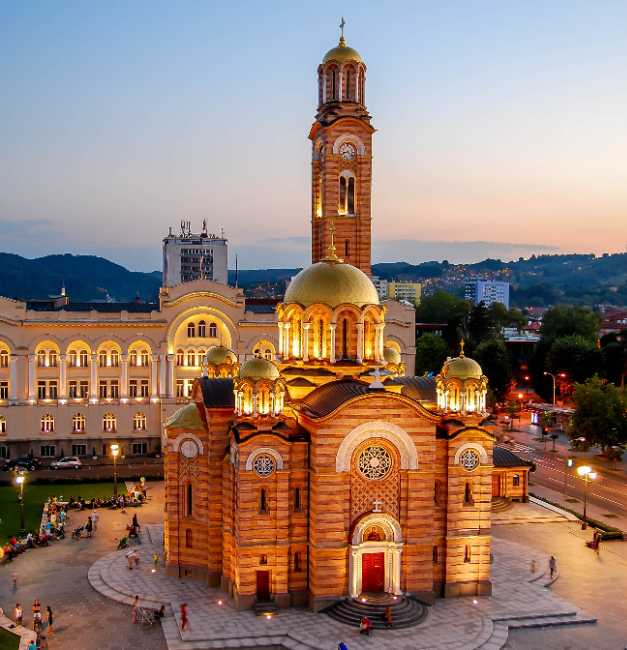
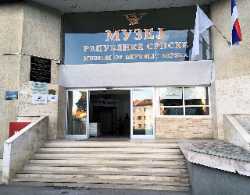
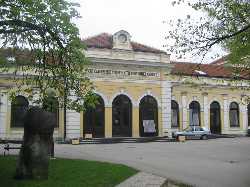
The cathedral is located at Trg srpskih vladara 3, Banja Luka 78000, Bosnia and Herzegovina. It occupies the absolute centerpiece position of the city's main administrative square. Because of its unbeatable central location, you can easily explore Banja Luka’s best cultural highlights on foot within a few minutes. Directly across the square sits the Banski Dvor Cultural Center, a grand, palace-like administrative building from the 1930s that hosts regular art exhibitions and concerts. Walking just a short distance south brings you straight to the Museum of the Republic of Srpska, home to massive archaeological and ethnographic collections, while a quick stroll west leads to the Museum of Contemporary Art of the Republic of Srpska, housed inside a beautiful historic Austro-Hungarian railway station. If you head toward the riverbanks, you can easily explore the sweeping stone walls of the Kastel Fortress, a massive medieval castle complex overlooking the Vrbas River.
 Museum
 Museum
 Museum
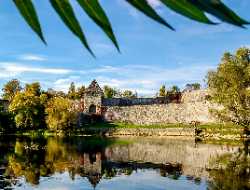 Castle
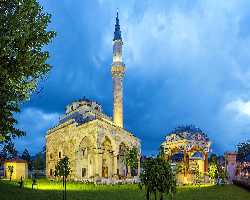 Mosque
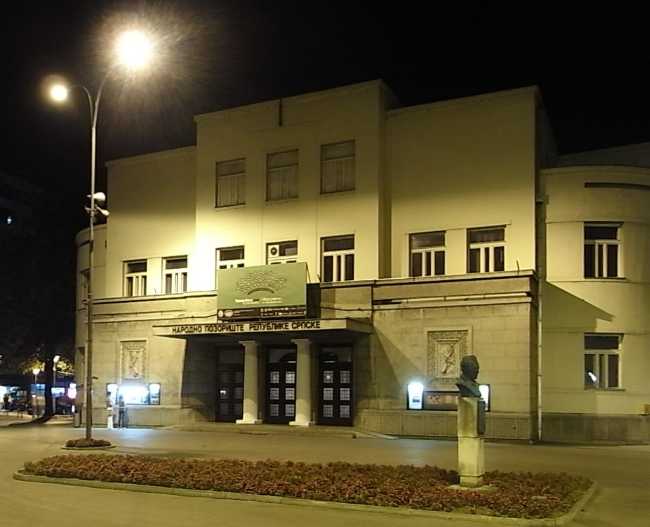 Theatre
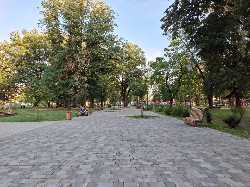 Park
Park