National Museum of Montenegro
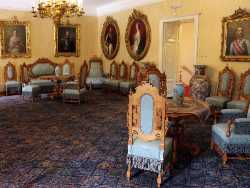
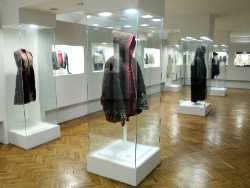
The National Museum of Montenegro in Cetinje is the country’s most important cultural institution, spread across several historic buildings that once formed the royal capital. One of its most interesting facts is that many exhibits are housed in former royal residences, allowing visitors to explore Montenegro’s heritage in the very rooms where its rulers lived and worked. Inside the King Nikola Museum, visitors can see original furniture, diplomatic gifts, and personal belongings of the Petrović-Njegoš dynasty. The royal dining room and study are preserved almost exactly as they were, offering a vivid sense of courtly life in the late 19th century. The museum also displays rare weapons, medals, and uniforms that illustrate Montenegro’s military traditions. The Ethnographic Museum presents traditional costumes, jewelry, and household items from different regions of the country. Its collection of embroidered garments is particularly striking, revealing the craftsmanship and symbolism woven into Montenegrin identity. In the Art Museum, visitors encounter works by prominent Montenegrin painters as well as European artists collected during royal travels. The building itself, with its elegant halls and high windows, enhances the experience.
Cetinje Montenegro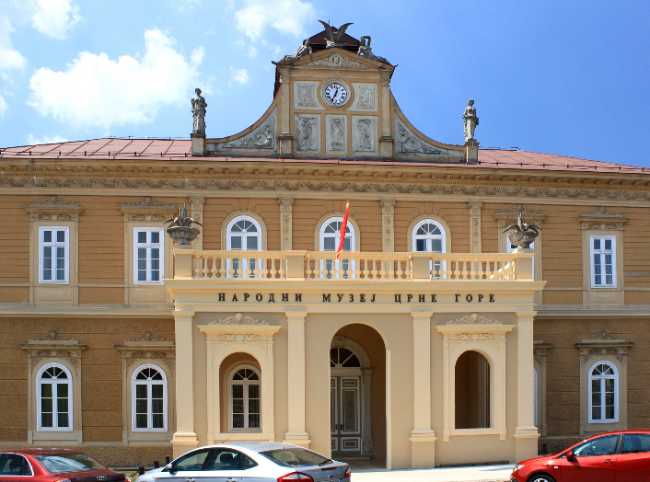
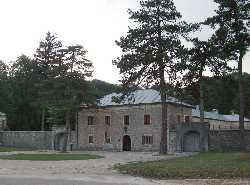
The National Museum of Montenegro is a complex of historic buildings spread through the centre of Cetinje, the old royal capital. Its main departments occupy the Government House on Novice Cerovića street, King Nikola’s Palace on the main square, and the Biljarda residence nearby, together telling the story of Montenegro’s history, art and culture. Just across the square stands Cetinje Monastery, one of the country’s most important Orthodox sites and home to significant relics. A short walk brings you to the Vlaška Church with its distinctive fence made from captured rifle barrels, and The Blue Palace that once housed the crown prince. The Biljarda itself, once the home of the poet-ruler Petar II Petrović Njegoš, forms part of the museum complex and contains personal belongings and manuscripts. The compact historic centre makes it easy to move between the museum buildings, the monastery and the former royal residences. Higher up the hill the path leads toward the grave of Vladika Danilo with views over the town, while a longer excursion reaches the Njegoš Mausoleum on Mount Lovćen. The museum complex sits at the natural heart of Cetinje, linking the royal palaces, churches and quiet streets of the old capital.
 Museum
 Museum
 Museum
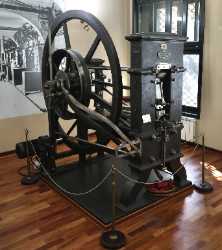 Museum
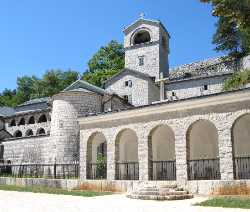 Monastery
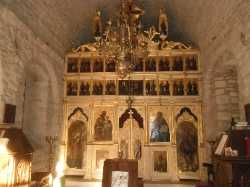 Church
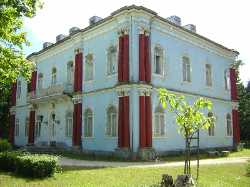 Palace
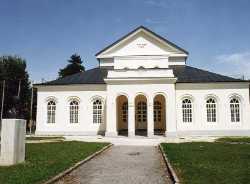 Theatre
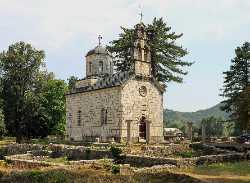 Church
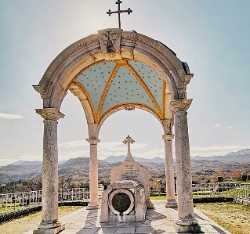 Observation deck