The Blue Palace
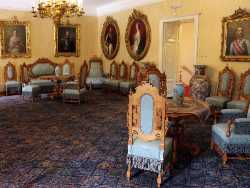
The Blue Palace is one of Cetinje’s most elegant royal-era buildings, a refined residence completed in 1895 for Crown Prince Danilo. Its name comes from the distinctive blue façade, chosen to symbolize modernity and European orientation at a time when Montenegro was asserting its statehood. The architecture blends neoclassical symmetry with subtle decorative flourishes, giving the palace a dignified yet approachable character. Inside, visitors encounter a sequence of salons that preserve the atmosphere of Montenegro’s last royal court. The reception hall displays portraits of the Petrović-Njegoš dynasty, offering a visual timeline of the country’s rulers. The state salon features period furniture, delicate stucco work, and ceremonial objects used during official audiences. Particularly interesting is the royal study, where Danilo worked on diplomatic correspondence; its original desk and library shelves remain in place, creating a sense of quiet continuity. Although not large, the Blue Palace stands out for its intimacy and historical clarity. It reveals how Montenegro’s royalty lived during a transformative era, balancing tradition with European influence. Today it serves as the residence of the Montenegrin president, adding a modern layer to its long political story.
Cetinje Montenegro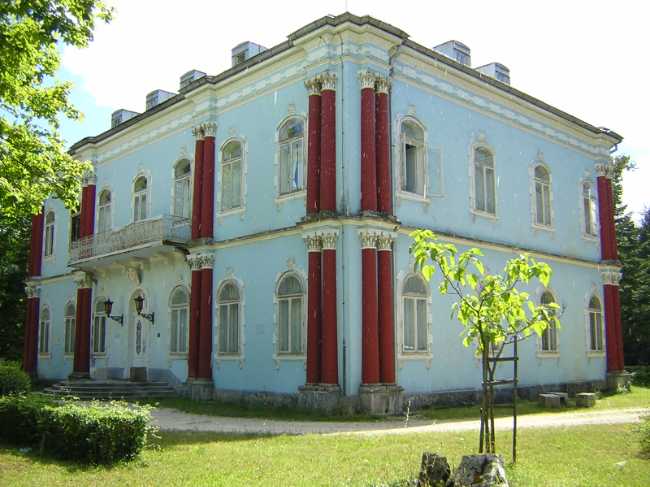
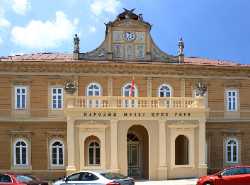
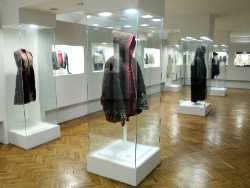
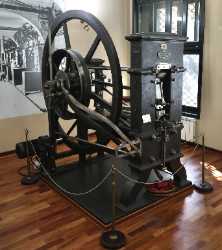
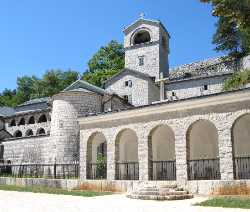
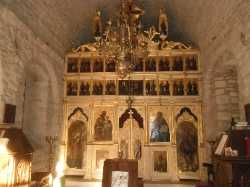
The Blue Palace stands along Njegoševa street in the heart of Cetinje, Montenegro’s old royal capital. This elegant pale-blue building, once the home of Crown Prince Danilo, now serves as the official residence of the President when duties bring him to the historic town. Just a short walk away you’ll find King Nikola’s Palace, the grand former royal residence that today forms part of the National Museum and lets you wander through rooms filled with the dynasty’s history. Nearby is the Biljarda, the sturdy former home of the poet-ruler Petar II Petrović-Njegoš, also turned into a museum with personal mementos and a striking relief map of the country. A few minutes further brings you to the Cetinje Monastery, the quiet spiritual centre of the town, and to the small Vlaška Church with its unique fence made from captured rifle barrels. The streets around here are lined with former foreign embassies and other fine old buildings that once made Cetinje feel like a miniature European capital. Everything sits close together in the compact historic centre, so you can easily stroll from The Blue Palace past the museums and palaces without any rush.
 Museum
 Museum
 Museum
 Museum
 Museum
 Monastery
 Church
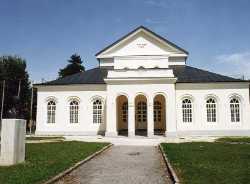 Theatre
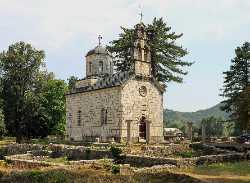 Church
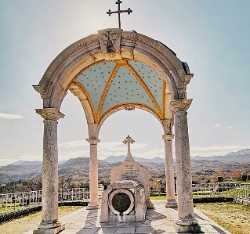 Observation deck