Synagogue–Basilica Archaeological Remains
The Synagogue–Basilica archaeological remains in Sarandë form one of the most unusual historic sites on Albania’s Ionian coast. Dating to the 5th–6th century, the complex began as a Jewish synagogue serving a thriving coastal community. Later, as Christianity spread, the building was transformed into a basilica—an architectural evolution rarely preserved so clearly in one place. This dual identity makes the site a key window into Sarandë’s multicultural past. Inside the excavated area, the most striking feature is the mosaic floor. Look for the menorah mosaic—a rare and beautiful symbol of Jewish heritage in the Balkans. Nearby, geometric and floral patterns reflect the later Christian phase, showing how artisans adapted the space without erasing its earlier history. You can also trace the synagogue’s original layout: the assembly hall, side rooms used for study or community gatherings, and the niche where the Torah ark once stood. When the building became a basilica, new architectural elements were added, including an apse and expanded aisles. These overlapping layers are still visible in the stone foundations.
Sarandë Albania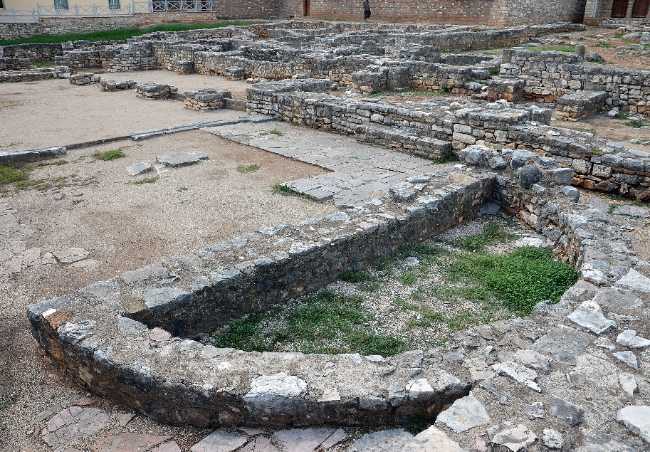
The Synagogue–Basilica Archaeological Remains sit right in the centre of Sarandë, next to Friendship Park between Rruga Skënderbeu and Rruga Onhezmi. You’ll find the open-air ruins in the heart of the modern town, an easy walk from the main streets and the bus stops. Once you’re there, the rest of the centre is only a few minutes away. The seafront promenade and harbour stretch nearby, with the Church of Saint Charalambos standing along the boulevard. The Museum of Archaeology, Museum of Traditions and Galeria Art Saranda form a small cluster close by. Higher up the hills you can reach Lekursi Castle and the Monastery of the Forty Saints for wider views over the bay. Everything is compact, so you can move from the ancient remains to the waterfront, the churches, the museums or the hilltop sites without any rush.
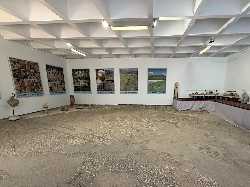 Museum
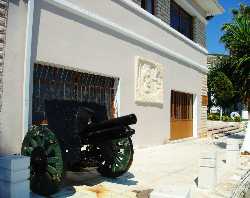 Museum
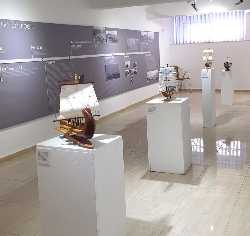 Gallery
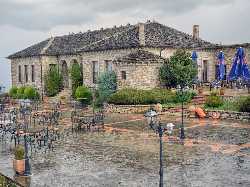 Castle
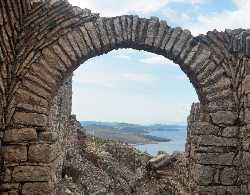 Monastery
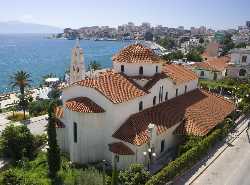 Church