Military Museum of Kalamata
The Military Museum of Kalamata offers a focused and atmospheric look at Greece’s modern military history, set within a former barracks building that has been carefully restored. Its collection spans key moments from the 19th century to the late 20th century, with particular emphasis on the Balkan Wars, the Greco‑Italian War, and the resistance movements of World War II. What makes the museum compelling is its blend of personal stories and original equipment, giving visitors a sense of both strategy and everyday experience. Inside, you’ll find uniforms, medals, field gear, and communication devices used by Greek soldiers across different eras. Detailed dioramas recreate scenes from mountain campaigns and defensive positions, illustrating how geography shaped warfare in the Peloponnese. A highlight is the display of authentic weapons—from rifles and machine guns to artillery shells—presented with clear historical context rather than spectacle. The museum also preserves letters, photographs, and personal belongings of local soldiers, offering a human dimension to national events. Exhibits on the Resistance include clandestine printing materials and coded messages that reveal the ingenuity of underground networks.
Kalamata Greece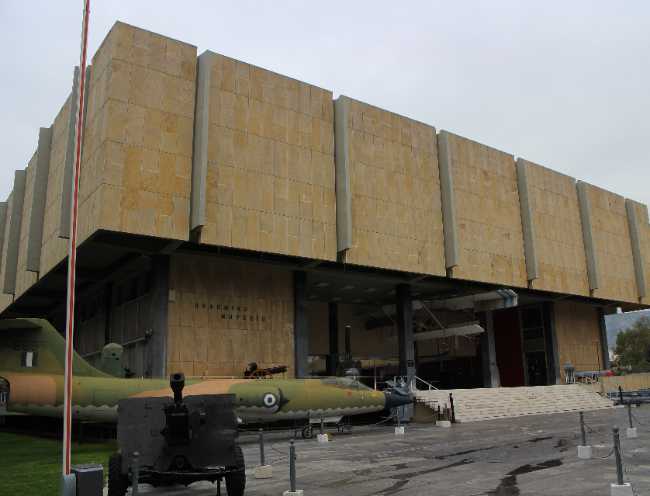
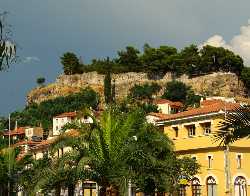
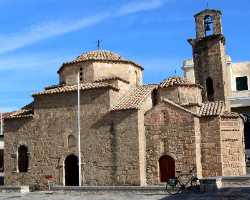
The Military Museum of Kalamata sits in a handsome neoclassical building in the historic center of Kalamata, Greece. You can find this venue at Mitropolitou Meletiou 10, Kalamata 241 00, Greece. The museum offers visitors a compelling look into modern Greek military history through collections of weapons, traditional uniforms, photographs, and historical relics spanning from the 1821 War of Independence to present-day peacekeeping missions. Its location in the heart of the old town makes it simple to explore surrounding historic landmarks on foot. Just a short walk up the cobblestone lane brings you to Kalamata Castle, a thirteenth-century Frankish fortress perched on a pine hill that provides sweeping views across the tiled city roofs and the Messenian Gulf. Tucked right nearby in the same district, you can visit the Historical and Folklore Museum of Kalamata to see regional crafts and artifacts, as well as the Victoria G. Karelias Collection of Traditional Greek Costumes. A quick stroll downhill toward 23rd of March Square leads to the Archaeological Museum of Messenia, which showcases ancient treasures from across the region, alongside the historic Church of the Holy Apostles where Greek independence was declared in 1821. Strolling slightly further south toward the modern downtown area reveals lively cultural spaces, local art galleries, and peaceful pedestrian streets filled with cafes.
 Museum
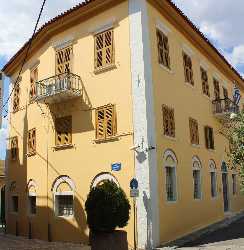
Historical and Folklore Museum of Kalamata
Museum
Historical and Folklore Museum of Kalamata
 Museum
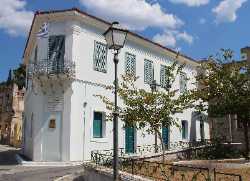
Victoria G. Karelias Collection of Greek Traditional Costumes
Museum
Victoria G. Karelias Collection of Greek Traditional Costumes
 Museum
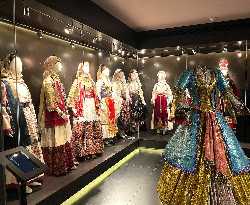
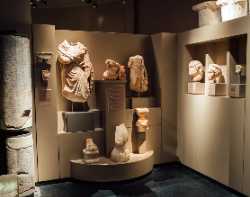
Benakeion Archaeological Museum of Kalamata
Museum
Benakeion Archaeological Museum of Kalamata
 Museum
Kalamata Castle
Museum
Kalamata Castle
 Castle
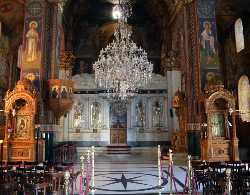
Cathedral Church of Ypapanti
Castle
Cathedral Church of Ypapanti
 Church
 of the Holy Apostles Kalamata
Church
Church of the Holy Apostles Kalamata
 Church
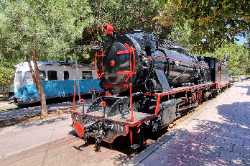
Kalamata Municipal Railway Park
Church
Kalamata Municipal Railway Park
 Museum