Tartini House
Tartini House is one of Piran’s most charming cultural landmarks, a quiet Venetian‑style residence that preserves the legacy of Giuseppe Tartini, the town’s most famous native and one of Europe’s great Baroque violinists. The house dates back to the 17th century and still carries the elegance of its original owners, with a façade facing Tartini Square and an intimate interior that feels more like a lived‑in home than a formal museum. Inside, visitors can explore rooms furnished with period objects, including Tartini’s personal belongings, letters, and portraits that reveal his life as a composer, teacher, and virtuoso. The highlight is his original violin, displayed alongside the legendary “Devil’s Trill Sonata,” whose dramatic story is explained through manuscripts and historical notes. Another fascinating feature is the small frescoed hall, decorated with delicate mythological scenes that show the artistic tastes of Piran’s elite. The house also contains a reconstructed music room where Tartini once practiced, offering insight into how musicians worked in the Baroque era. Together, these spaces create an intimate portrait of a man whose music shaped European culture.
Piran Slovenia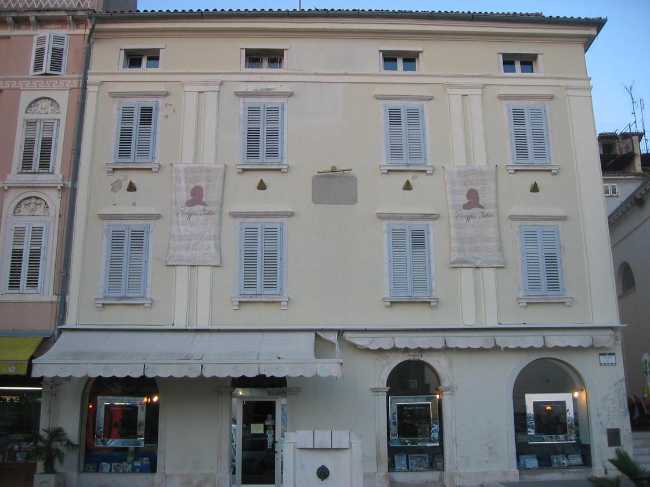
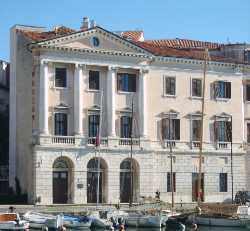
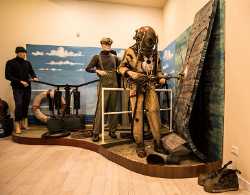
Tartini House is located in Piran, Slovenia, right on Tartini Square in the center of the old town. It is the birthplace of Giuseppe Tartini, the 18th-century composer and violinist best known for his “Devil’s Trill Sonata.” The house, one of the oldest in the square, dates to the 14th century and stands out with its Venetian Gothic façade and stone details. Today it operates as a museum and cultural center managed by the Piran Coastal Galleries. Its location on Tartini Square puts it at the heart of Piran’s attractions. The square itself is the town’s main meeting place, surrounded by colorful Venetian buildings, cafés, and the municipal palace. Just steps away is the Church of St. George with its bell tower, which offers panoramic views over Piran, the Adriatic Sea, and the Alps on clear days. The medieval town walls above the old town provide another viewpoint and insight into Piran’s history as a Venetian port. Along the waterfront you’ll find the Sergej Mašera Maritime Museum, the Museum of Underwater Activities, restaurants serving Istrian seafood, and spots for swimming. The Sečovlje Salina Nature Park is also nearby, showing traditional salt production. Tartini House is a cultural landmark that anchors Piran’s blend of music, Venetian architecture, and coastal charm.
 Museum
 Museum
 Museum
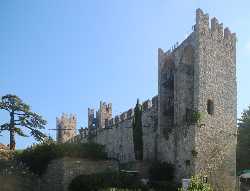 Historical Landmark
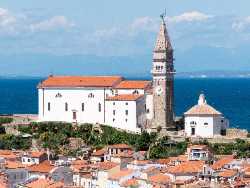 Church
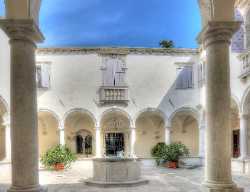 Monastery
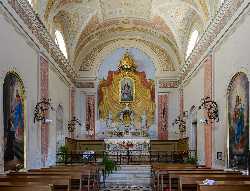 Church
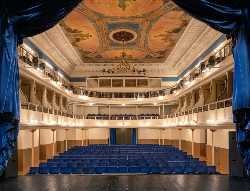 Theatre
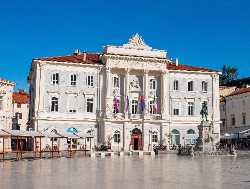 Palace