Walls of Piran
The Walls of Piran form one of the most dramatic historical features on Slovenia’s coast, wrapping the old town in a sequence of medieval and Renaissance fortifications. Built in stages from the 7th century onward, they once protected Piran from rival coastal towns and later from Ottoman raids. One of the most interesting facts is that the walls originally stretched all the way to the sea; as the town expanded, new defensive lines were added higher on the hill, creating the layered system visible today. Visitors can walk along the preserved upper section above the town, where towers and battlements offer sweeping views of Piran’s red roofs, Tartini Square, and the Adriatic. The Bastion Towers are a highlight: their narrow stairways and lookout points reveal how guards monitored the coastline. From here, you can clearly see the medieval street grid below, shaped by the need to fit within the original fortifications. Inside the towers, small exhibition spaces explain how the walls were built, showing stonework techniques and old maps that trace Piran’s shifting borders. The experience is both architectural and scenic, combining military history with one of the most iconic panoramas on the Slovenian coast.
Piran Slovenia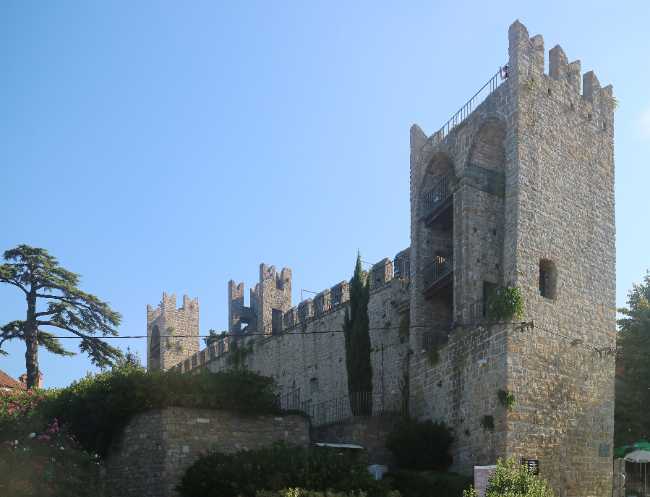
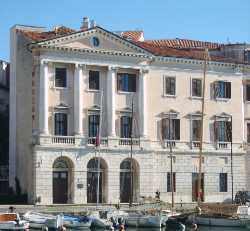
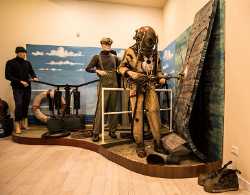
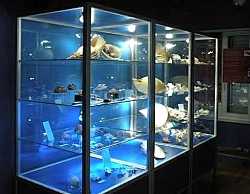
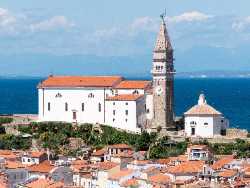
The Walls of Piran are located in Piran, Slovenia, rising above the old town on the hillside overlooking the Adriatic Sea. Built in several phases from the 7th to the 16th century, the walls were constructed to defend Piran when it was an important Venetian port. Today, the best-preserved section stretches along the ridge above the town and includes seven towers and fortified gates. The walls are just a short uphill walk from the center of the old town, making them easy to combine with other attractions. Below lies Tartini Square, the main oval plaza surrounded by Venetian buildings, cafés, and the Tartini House dedicated to the composer Giuseppe Tartini. Nearby is the Church of St. George with its bell tower, another popular viewpoint over the town and sea. Along the waterfront you’ll find the Sergej Mašera Maritime Museum in Gabrielli Palace, the Museum of Underwater Activities, and the Shell Museum, each adding a different dimension to Piran’s maritime story. The seaside promenade offers restaurants, swimming spots, and views of fishing boats. Just outside town, the Sečovlje Salina Nature Park showcases traditional salt production that has shaped the region for centuries.
 Museum
 Museum
 Museum
 Museum
 Church
 Monastery
 Church
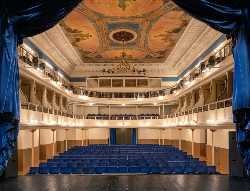 Theatre
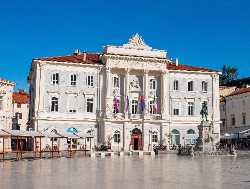 Palace