Old Town of Ulcinj
Old Town Ulcinj is one of the Adriatic’s oldest continuously inhabited fortifications, a stone labyrinth shaped by Illyrians, Romans, Byzantines, Venetians, and Ottomans. Its most intriguing fact is its long association with Mediterranean piracy: for centuries, Ulcinj was a haven for corsairs, merchants, and sailors whose stories still echo through its narrow streets. Local tradition even claims that Miguel de Cervantes lived here as a captive, drawing inspiration for Don Quixote. Inside the walls, visitors find a compact world of steep alleys, carved lintels, and sunlit terraces overlooking the sea. The Venetian Palace stands out with its elegant arches, while the Balšić Tower offers sweeping views of the coastline. Small museums preserve maritime relics, household objects, and pirate-era artefacts that reveal how diverse cultures shaped daily life. You can explore medieval gates, Ottoman houses with wooden balconies, and ancient cisterns that supplied the fortress with water.
Ulcinj Montenegro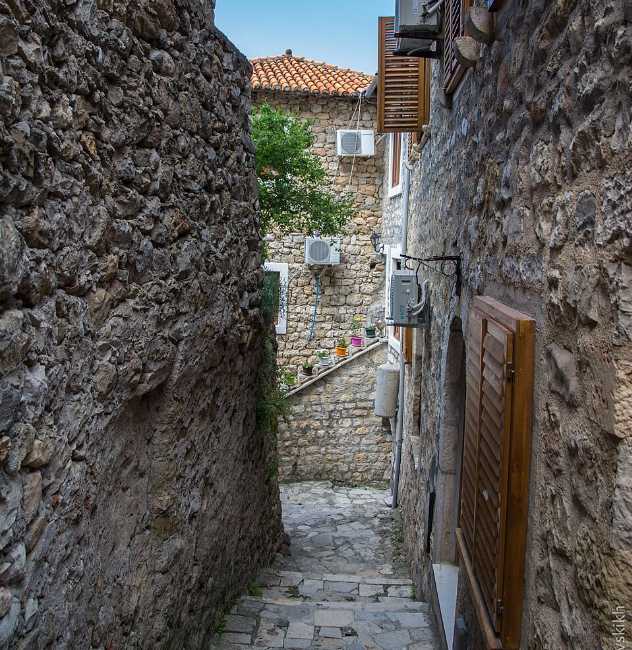
The Old Town of Ulcinj is that perfect little hilltop maze you see on all the postcards. It is located right on the Adriatic coast in the very center of Ulcinj, on a rocky cliff above the sea. The official address is simply Stari Grad bb, 85360 Ulcinj, Montenegro. You walk up from Mala Plaza, the Small Beach, and in a couple of minutes you are at the main gate. Once you are inside, you are inside the Old Town. It is not just one building, it is a whole fortified town. The walls go back to Illyrian times, more than two thousand years old, later rebuilt by Venetians and Ottomans, so every stone has a story. Inside it is all narrow cobbled alleys, old stone houses, little cafes and shops where you can just get lost in a nice way. The most famous part is Ulcinj Castle itself, which is basically the Old Town. Right in the center you have Sahat kula, the old Ottoman Clock Tower from 1754. A few steps away is Balsic Tower, a beautiful medieval tower from the 14th century that now works as an art gallery and has an amazing view. In front of it is the Slave Square, the old pirate market. You also have the Museum of Ulcinj, which is actually in two lovely buildings - a former church turned into an Archaeological Museum and the old palace of the Balšić family with ethnographic collections.
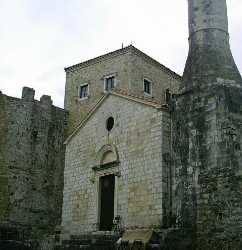 Museum
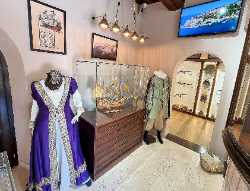 Museum
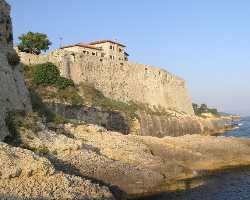 Fortress
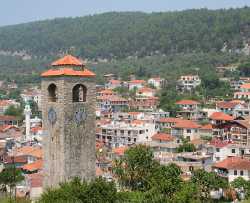 Tower
Tower