Museum of Ancient Greek Technology by Kotsanas
The Museum of Ancient Greek Technology by Kotsanas in Heraklion offers a vivid journey into the ingenuity of classical engineers. Its collection proves that many “modern” inventions were already imagined thousands of years ago. One of the most surprising exhibits is the Antikythera mechanism, often called the world’s first analog computer, reconstructed with working gears that demonstrate how ancient astronomers predicted eclipses and planetary cycles. Equally captivating is Heron’s steam device, a rotating sphere powered by heated water—an early hint of steam technology long before the Industrial Revolution. Visitors can explore automatic theaters, hydraulic clocks, coded locks, and ingenious communication systems such as the Pigeon telegraph. Many machines are fully functional, allowing you to see gears turn, levers lift, and mechanisms perform exactly as described in ancient texts. The museum’s strength lies in its hands‑on approach: each device is accompanied by clear explanations, reconstructions, and demonstrations that reveal how Greek inventors blended mathematics, physics, and imagination. A highlight is the section on everyday innovations—water pumps, kitchen tools, musical instruments—showing how technology shaped daily life in antiquity. The museum is compact yet dense with discoveries, making it one of Heraklion’s most engaging cultural stops.
Heraklion Greece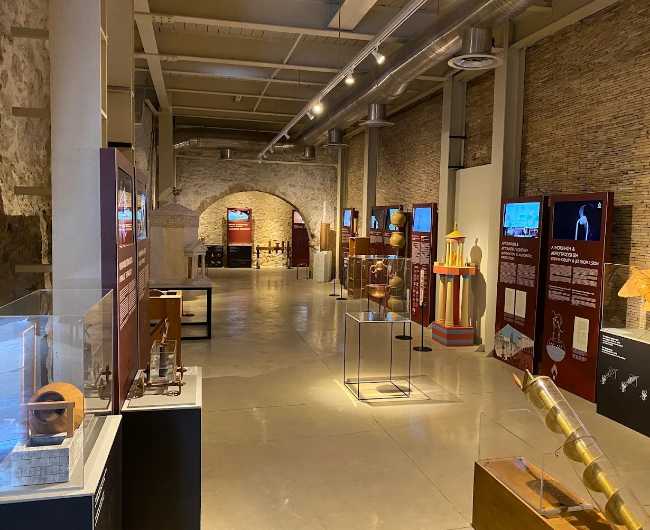
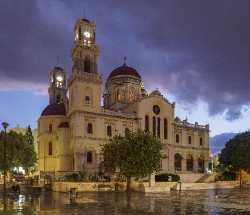
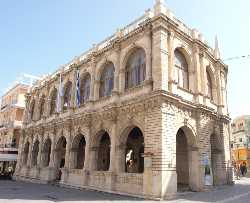
The Kotsanas Museum of Ancient Greek Technology in Heraklion sits right in the vibrant heart of the city. You will find it housed inside a beautiful Venetian building called the Palazzo d'Ittar at 18 Epimenidou Street, Heraklion, Crete. Its central location makes it easy to spot while wandering through the town center, and it puts you within short walking distance of Heraklion’s most popular cultural sites and historic landmarks. Just a short stroll down the road, you can visit the famous Heraklion Archaeological Museum, which holds one of the world's finest collections of Minoan art and artifacts. Heading toward the bustling seafront harbor brings you to the imposing Rocca a Mare Fortress, also known as the Koules Fortress, a grand 16th-century Venetian castle where you can walk along the ancient sea walls.Nearby in the town square, you can admire the iconic Morosini Fountain, surrounded by lively cafes and local shops. Right next to it stands the historical Church of Saint Titus and the Venetian Loggia, a grand 17th-century building that served as an ancient nobleman's club and now functions as the city hall. If you continue strolling through the historic area, you will also spot the majestic Cathedral of Saint Minas, one of the largest churches in Greece. The museum's prime spot makes it an ideal stop on any Heraklion sightseeing route.
 Museum
Historical Museum of Crete
Museum
Historical Museum of Crete
 Museum
Natural History Museum of Crete
Museum
Natural History Museum of Crete
 Museum
Heraklion Municipal Art Gallery
Museum
Heraklion Municipal Art Gallery
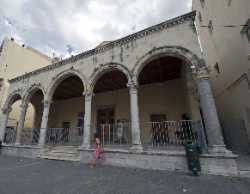 Museum
 of Musical Instruments “Thirathen”
Museum
Museum of Musical Instruments “Thirathen”
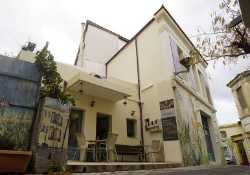 Museum
Heraklion Museum of Visual Arts
Museum
Heraklion Museum of Visual Arts
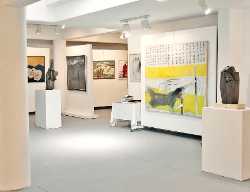 Museum
Venetian Fortress of Koules
Museum
Venetian Fortress of Koules
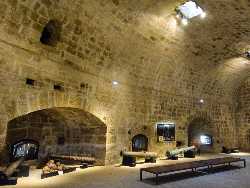 Fortress
Venetian Walls of Heraklion
Fortress
Venetian Walls of Heraklion
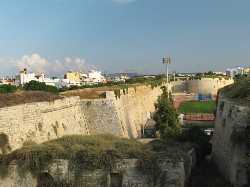 Fortress
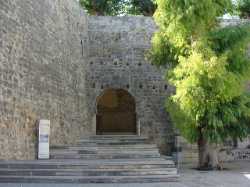
Venetian Gate of Saint George
Fortress
Venetian Gate of Saint George
 Historical Landmark
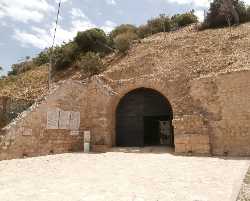
Stoa Makasi
Historical Landmark
Stoa Makasi
 Historical Landmark
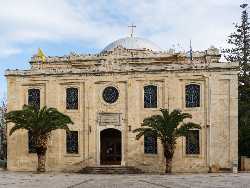
Cathedral of Saint Titus
Historical Landmark
Cathedral of Saint Titus
 Church
Saint Minas Cathedral
Church
Saint Minas Cathedral
 Cathedral
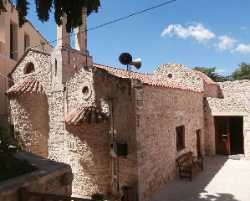
Church of Saint Matthew of Sinai
Cathedral
Church of Saint Matthew of Sinai
 Church
Venetian Loggia
Church
Venetian Loggia
 Palace
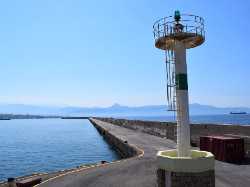
Heraklion Lighthouse
Palace
Heraklion Lighthouse
 Lighthouse