Venetian Gate of Saint George
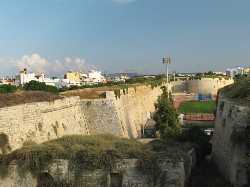
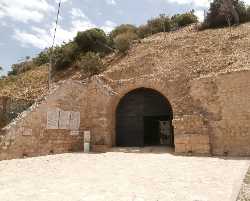
The Saint George Gate is one of the most atmospheric entrances in Heraklion’s Venetian fortifications, built in the 16th century as part of the vast defensive system protecting the city. Unlike the more imposing military bastions, this gate served both strategic and civic purposes, linking the fortified interior with the countryside and the road toward Knossos. Its elegant façade, with carved stone details and balanced proportions, reflects the Venetian desire to combine functionality with architectural refinement. Inside, the gate reveals a spacious vaulted passageway that once accommodated soldiers, travellers, and merchants. Today, it houses a small cultural space often used for art exhibitions and community events, giving new life to a structure that has witnessed centuries of change. Informational displays explain how the gate operated during the long Ottoman siege of Heraklion, when every entrance was crucial for defence and supply routes. One of the most interesting features is the preserved stone benches along the interior walls, believed to have served as resting spots for guards. The acoustics of the vaulted chamber are also notable, making it a surprisingly resonant venue for occasional performances.
Heraklion Greece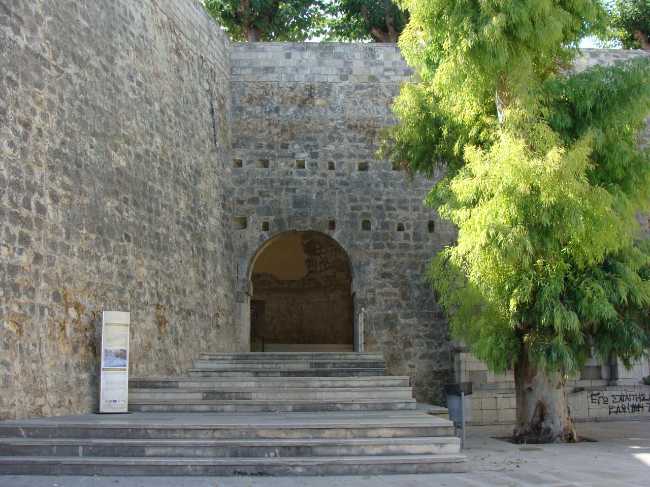
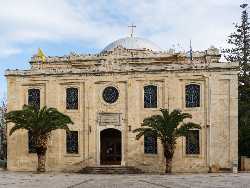
The Venetian Gate of Saint George sits right along the historic defensive ring of Heraklion, Crete. You can find this impressive historical monument at Eleftherias Square (Platia Eleftherias 712 01), where the modern city square meets the ancient fortification walls. Known locally as the Gate of Saint George or Pyli Agiou Georgiou, it served as a major entrance through the Venetian fortification system and now acts as a peaceful subterranean venue for cultural exhibitions and events. Its central location on Eleftherias Square puts you within seconds of Heraklion’s main attractions. Directly across the square stands the world-renowned Heraklion Archaeological Museum, which holds an incredible collection of Minoan treasures and artifacts. Taking a brief stroll from the gate brings you toward the Museum of Ancient Greek Technology by Kotsanas and the historic Church of Saint Titus. Heading slightly west along the bustling pedestrian streets leads you to Lions Square, home to the iconic 17th-century Morosini Fountain, the Venetian Loggia, and the Basilica of Saint Mark. Walking further south allows you to explore the sprawling Venetian Walls and the Martinengo Bastion, while a leisurely walk north toward the sea brings you to the old harbor and the grand Venetian Fortress of Koules. Positioned at the crossroads of the city, the gate is a perfect starting point for discovering Heraklion's historic sights.
 Museum
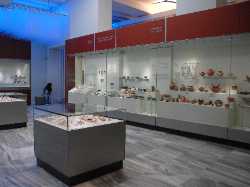
Historical Museum of Crete
Museum
Historical Museum of Crete
 Museum
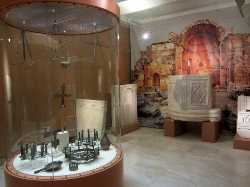
Natural History Museum of Crete
Museum
Natural History Museum of Crete
 Museum
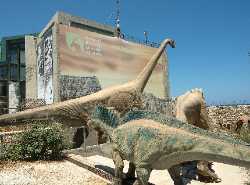
Heraklion Municipal Art Gallery
Museum
Heraklion Municipal Art Gallery
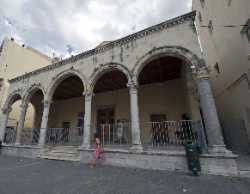 Museum
 of Ancient Greek Technology by Kotsanas
Museum
Museum of Ancient Greek Technology by Kotsanas
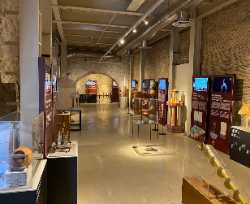 Museum
 of Musical Instruments “Thirathen”
Museum
Museum of Musical Instruments “Thirathen”
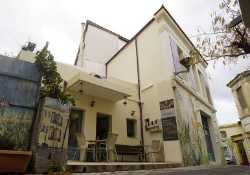 Museum
Heraklion Museum of Visual Arts
Museum
Heraklion Museum of Visual Arts
 Museum
Venetian Fortress of Koules
Museum
Venetian Fortress of Koules
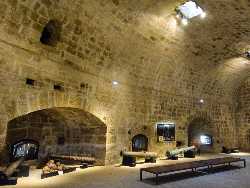 Fortress
Venetian Walls of Heraklion
Fortress
Venetian Walls of Heraklion
 Fortress
Stoa Makasi
Fortress
Stoa Makasi
 Historical Landmark
Cathedral of Saint Titus
Historical Landmark
Cathedral of Saint Titus
 Church
Saint Minas Cathedral
Church
Saint Minas Cathedral
 Cathedral
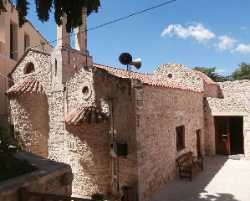
Church of Saint Matthew of Sinai
Cathedral
Church of Saint Matthew of Sinai
 Church
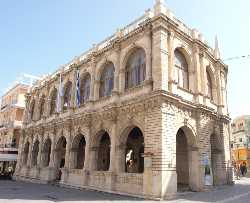
Venetian Loggia
Church
Venetian Loggia
 Palace
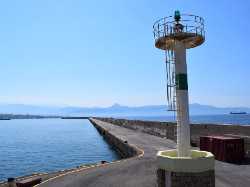
Heraklion Lighthouse
Palace
Heraklion Lighthouse
 Lighthouse