Venetian Walls of Heraklion
The Venetian Walls form one of the largest and best‑preserved fortification systems in the Mediterranean. Built by the Venetians in the 16th century, the walls stretch for more than four kilometres, enclosing the old city in a vast defensive ring designed to withstand heavy artillery. Their construction took over a century, involving master engineers who combined geometric precision with massive earthworks to absorb cannon impact. Walking along the walls reveals a sequence of imposing bastions, each with its own story. The most famous is the Martinengo Bastion, where the tomb of the Cretan writer Nikos Kazantzakis rests, offering a quiet viewpoint over Heraklion. The Bethlehem Bastion often hosts cultural events and exhibitions, showing how these military structures have been adapted for modern life. Inside the fortifications, you can explore hidden passages, ramparts, and restored gates such as the Chanioporta and the Jesus Gate, once crucial entry points to the city. Informational panels explain how the walls endured the long Ottoman siege of 1648–1669, one of the most dramatic episodes in Cretan history.
Heraklion Greece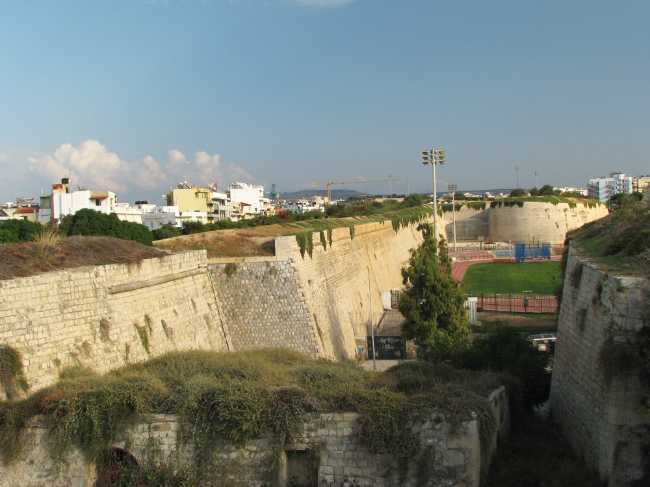
The Venetian Walls of Heraklion form a massive star-shaped fortress structure surrounding the historic center of Heraklion, Crete. You can access these impressive fortifications at various points around the old town, with a central section located along Leoforos Nikolaou Plastira, Iraklio 712 01. Standing as one of the best-preserved Venetian defensive networks in the Mediterranean, the walls feature wide walking paths on top that offer panoramic views across the entire city. At the highest point of the fortifications, Martinengo Bastion, you will find the final resting place and tomb of Nikos Kazantzakis, the famous Greek author. Walking down from the ramparts brings you right into the bustling heart of the city, where you can easily reach major cultural attractions. A short walk inside the ring leads to the Cathedral of Saint Minas, one of the largest cathedrals in Greece, as well as the historic Bembo Fountain and the Heraklion Central Market. Heading toward the northern edge of the old town brings you to Lions Square, where you can admire the 17th-century Morosini Fountain, the Venetian Loggia, and the Basilica of Saint Mark. Strolling toward the sea leads to the seafront promenade, where you will find the Historical Museum of Crete and the grand Koules Fortress guarding the old harbor. If you wish to venture beyond the center, the ancient Minoan Palace of Knossos lies just a short drive to the south.
 Museum
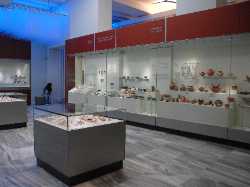
Historical Museum of Crete
Museum
Historical Museum of Crete
 Museum
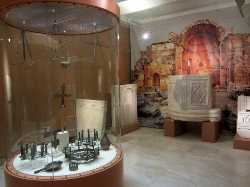
Natural History Museum of Crete
Museum
Natural History Museum of Crete
 Museum
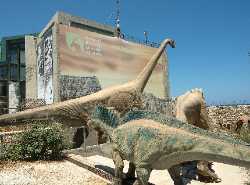
Heraklion Municipal Art Gallery
Museum
Heraklion Municipal Art Gallery
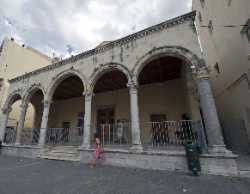 Museum
 of Ancient Greek Technology by Kotsanas
Museum
Museum of Ancient Greek Technology by Kotsanas
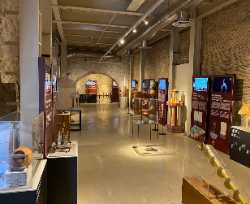 Museum
 of Musical Instruments “Thirathen”
Museum
Museum of Musical Instruments “Thirathen”
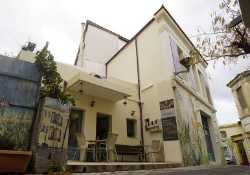 Museum
Heraklion Museum of Visual Arts
Museum
Heraklion Museum of Visual Arts
 Museum
Venetian Fortress of Koules
Museum
Venetian Fortress of Koules
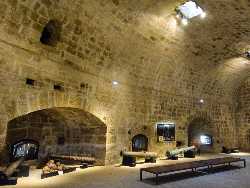 Fortress
Venetian Gate of Saint George
Fortress
Venetian Gate of Saint George
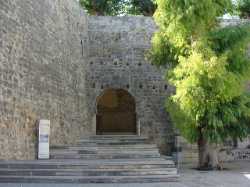 Historical Landmark
Stoa Makasi
Historical Landmark
Stoa Makasi
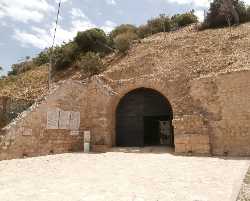 Historical Landmark
Cathedral of Saint Titus
Historical Landmark
Cathedral of Saint Titus
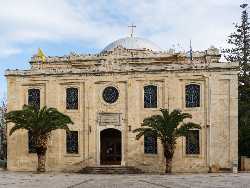 Church
Saint Minas Cathedral
Church
Saint Minas Cathedral
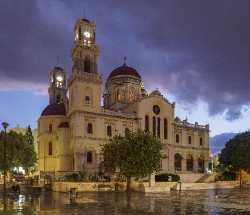 Cathedral
Church of Saint Matthew of Sinai
Cathedral
Church of Saint Matthew of Sinai
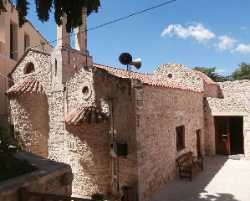 Church
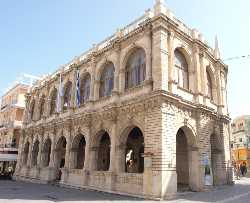
Venetian Loggia
Church
Venetian Loggia
 Palace
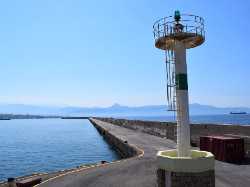
Heraklion Lighthouse
Palace
Heraklion Lighthouse
 Lighthouse