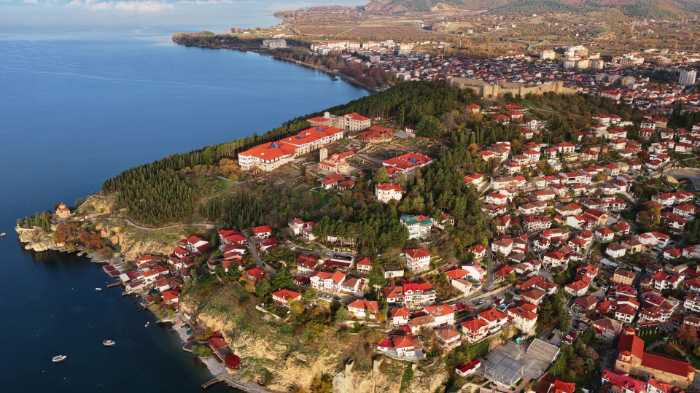
Ohrid
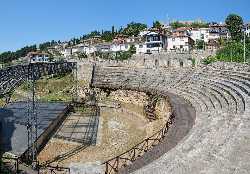
Ohrid is one of the oldest continuously inhabited cities in Europe and one of North Macedonia's most treasured cultural destinations. Set on the shores of the crystal-clear Lake Ohrid, the city is a UNESCO World Heritage Site celebrated for its extraordinary blend of history, religion and natural beauty. For centuries, Ohrid was an important center of education, art and Christianity, leaving behind a remarkable collection of monuments and archaeological treasures. Dominating the skyline is Samuel's Fortress, a medieval castle that overlooks the old town and the lake. Built on earlier fortifications, the fortress offers breathtaking panoramic views and allows visitors to walk along its restored defensive walls. Nearby lies the Ancient Theatre of Ohrid, a Hellenistic amphitheatre later used by the Romans, which today hosts concerts and cultural festivals. Ohrid is home to several outstanding museums. The National Institution Museum Ohrid occupies the historic Robev Family House and presents archaeological discoveries, ethnographic collections and exhibits illustrating the city's rich past. The Bay of Bones Museum is a unique open-air archaeological museum built above a reconstructed prehistoric pile-dwelling settlement on Lake Ohrid. Visitors interested in medieval history can also explore the Museum on Water facilities and archaeological displays that explain life around the lake thousands of years ago. Among the city's most impressive religious monuments is the Cathedral Church of Saint Sophia, one of the finest examples of medieval Byzantine architecture in the Balkans. Its well-preserved frescoes date from the 11th and 13th centuries and are considered masterpieces of Orthodox religious art. Another iconic landmark is the Church of St. John at Kaneo, dramatically perched on a cliff above the lake, making it one of the most photographed churches in North Macedonia. The Monastery of Saint Panteleimon at Plaošnik, where Saints Clement and Naum helped establish an important literary and religious center, is another essential stop. Historic landmarks continue throughout the old town with its narrow cobbled streets, traditional Ottoman-era houses and ancient city walls. Visitors can also see the Early Christian Basilica, whose beautiful mosaic floors reveal the city's importance during the first centuries of Christianity. Combining magnificent lake scenery with more than two thousand years of history, Ohrid offers an unforgettable experience. From exploring Samuel's Fortress and discovering fascinating museums to admiring the Cathedral of Saint Sophia and the city's remarkable archaeological sites, Ohrid remains one of the most rewarding cultural destinations in Southeast Europe.
What to see in Ohrid
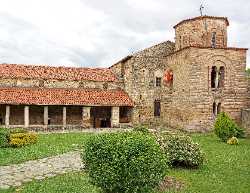 Church
 of Saint John the Theologian at Kaneo
Church
Church of Saint John the Theologian at Kaneo
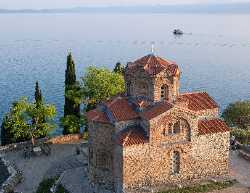 Church
 of Saints Clement and Panteleimon
Church
Church of Saints Clement and Panteleimon
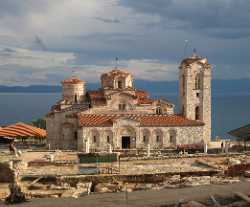 Church
 of the Virgin Mary Peribleptos
Church
Church of the Virgin Mary Peribleptos
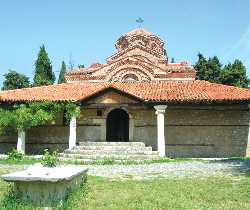 Church
 of St. Nicholas Bolnički
Church
Church of St. Nicholas Bolnički
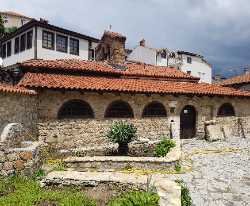 Church
Samoil’s Fortress
Church
Samoil’s Fortress
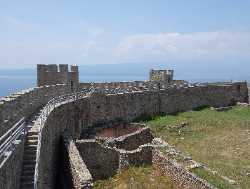 Fortress
National Ohrid Museum
Fortress
National Ohrid Museum
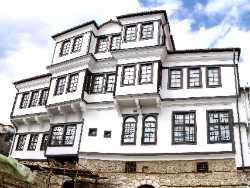 Museum
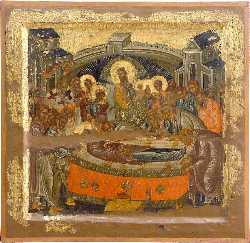
Icon Gallery of Ohrid
Museum
Icon Gallery of Ohrid
 Museum
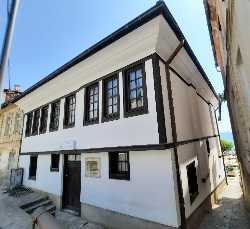
Memorial House of Hristo Uzunov
Museum
Memorial House of Hristo Uzunov
 Museum
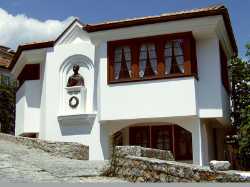
Memorial House of Grigor Prlichev
Museum
Memorial House of Grigor Prlichev
 Museum
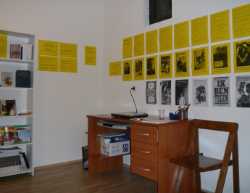
A. den Doolaard Museum
Museum
A. den Doolaard Museum
 Museum
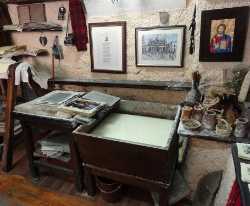
National Workshop for Handmade Paper
Museum
National Workshop for Handmade Paper
 Museum
Ancient Theatre of Lychnidos
Museum
Ancient Theatre of Lychnidos
 Theatre