A. den Doolaard Museum
A. den Doolaard Museum in Ohrid is a small, atmospheric space dedicated to the Dutch writer who became one of the city’s most loyal chroniclers. Known for his vivid travel books and his deep affection for Macedonia, Den Doolaard introduced Ohrid to Western readers long before mass tourism arrived, portraying it as a place of light, folklore, and quiet heroism. Inside the museum, visitors can explore first editions of his novels, handwritten notes, and correspondence that reveal how he shaped his stories while living among local families. One of the most engaging displays focuses on The Wedding of the Seven Gypsies, the book that made him famous and helped spark European interest in Balkan culture. A multimedia corner plays interviews and archival footage, showing Den Doolaard’s reflections on Ohrid’s landscapes and traditions. The museum also recreates his modest writing corner, complete with period furniture and personal objects that evoke his long stays by the lake. Photographs document his friendships with local artists and activists, illustrating how he became woven into Ohrid’s cultural life. For many visitors, the highlight is the section on his wartime journalism, which underscores his courage and moral clarity.
Ohrid North Macedonia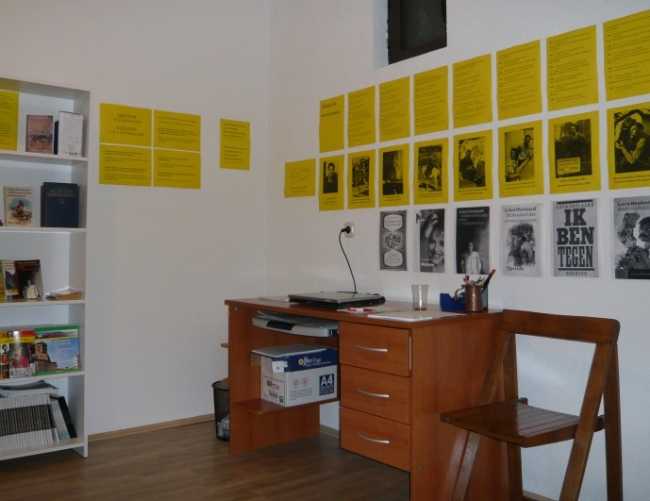
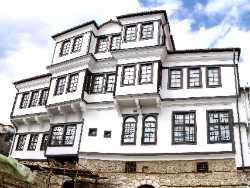
The A. den Doolaard Museum sits right in the heart of Ohrid’s old town at Ulica Car Samoil 34 (also written as Tsar Samoil 34), 6000 Ohrid. It’s a small, welcoming spot inside the Cultura 365 cultural center, dedicated to the Dutch writer who fell in love with this lakeside place decades ago and helped put it on the map for many visitors from the Netherlands.You’ll find it along one of the most atmospheric streets in the historic quarter, where cobbled lanes wind between traditional houses and little shops. Just a short stroll away on the same street is the beautiful Robev Family House, which now serves as part of the National Museum and shows off classic Ohrid architecture and local history. Nearby you’ll also come across the Memorial House of Hristo Uzunov and the National Workshop for Handmade Paper, where you can watch traditional paper-making.Keep walking and you’ll reach the Church of St. Sophia, one of the city’s most important old churches, and the remains of the Lower Gate that once marked the entrance to the fortified town. A bit higher up the hill, the ancient amphitheatre and Samuel’s Fortress (Tsar Samoil’s Fortress) offer great views over the old town and Lake Ohrid. Plaoshnik with its churches and archaeological remains is also close by, and the famous Church of St. John at Kaneo sits further along the shore if you feel like a longer walk.
 Museum
Icon Gallery of Ohrid
Museum
Icon Gallery of Ohrid
 Museum
Memorial House of Hristo Uzunov
Museum
Memorial House of Hristo Uzunov
 Museum
Memorial House of Grigor Prlichev
Museum
Memorial House of Grigor Prlichev
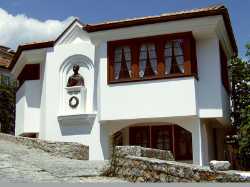 Museum
National Workshop for Handmade Paper
Museum
National Workshop for Handmade Paper
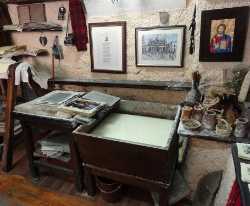 Museum
Samoil’s Fortress
Museum
Samoil’s Fortress
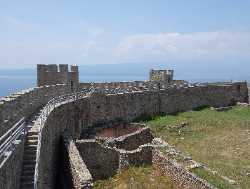 Fortress
Church of Saint Sophia
Fortress
Church of Saint Sophia
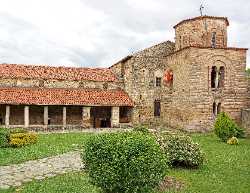 Church
 of Saint John the Theologian at Kaneo
Church
Church of Saint John the Theologian at Kaneo
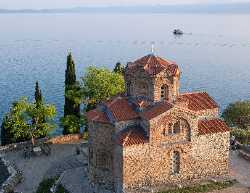 Church
 of Saints Clement and Panteleimon
Church
Church of Saints Clement and Panteleimon
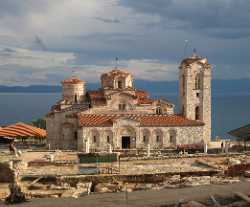 Church
 of the Virgin Mary Peribleptos
Church
Church of the Virgin Mary Peribleptos
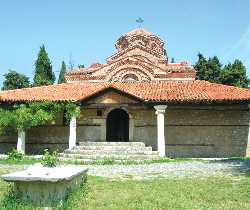 Church
 of St. Nicholas Bolnički
Church
Church of St. Nicholas Bolnički
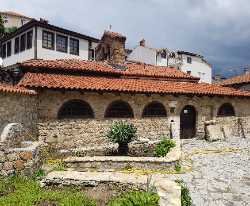 Church
Ancient Theatre of Lychnidos
Church
Ancient Theatre of Lychnidos
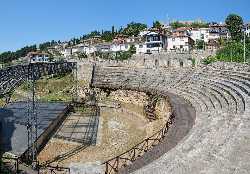 Theatre