Church of Saints Clement and Panteleimon
Church of Saints Clement and Panteleimon in Ohrid stands on Plaošnik, a site layered with history. Rebuilt in the early 2000s on the foundations of Clement’s original 9th‑century monastery, it marks the birthplace of Slavic literacy. Here, Saint Clement trained thousands of students, shaping the cultural identity of the region and spreading the Glagolitic and Cyrillic scripts across the Balkans. Inside, the church blends archaeological authenticity with contemporary craftsmanship. Visitors can see fragments of early medieval frescoes, carefully preserved and displayed to show how the original monastery looked. The marble iconostasis is one of the interior’s most striking features, combining traditional Orthodox forms with modern precision. Beneath the church, excavations reveal remains of the early Christian basilica that once stood here, including mosaic floors with geometric and floral patterns. One of the most interesting facts is that Plaošnik was a major intellectual center during Clement’s time, effectively functioning as one of Europe’s earliest Slavic universities. The surrounding archaeological park highlights this legacy with visible foundations, artifacts, and interpretive panels.
Ohrid North Macedonia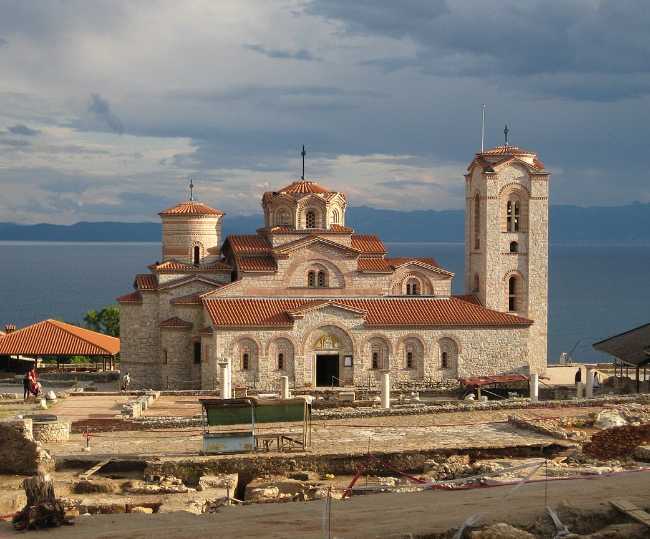
The Church of Saints Clement and Panteleimon is located on the Plaosnik hill, at Kuzman Kapidan, Ohrid 6000, North Macedonia. It sits just below Samoil's Fortress, on a wide open terrace overlooking Lake Ohrid, and it is considered the place where St. Clement taught his students back in the 9th century. It is a very central spot for sightseeing. Right next to it you have the large archaeological excavations of Plaosnik with early Christian basilicas and mosaics, and just a few steps above is Samoil's Fortress with its massive walls and the best panorama of the town and lake. Walking downhill for two or three minutes you come to the iconic Church of Saint John at Kaneo, perched on the cliff above Kaneo Beach, and on the other side the Ancient Theatre of Ohrid carved into the hillside. If you continue down toward the center you will find the Church of Saint Sophia, the Robevi Family House which is now the National Museum, and the National Workshop for Handmade Paper on Car Samoil street. Everything around Plaosnik is within easy walking distance, so you can see the fortress, the churches and the museums all in one relaxed stroll.
 Museum
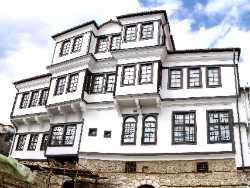
Icon Gallery of Ohrid
Museum
Icon Gallery of Ohrid
 Museum
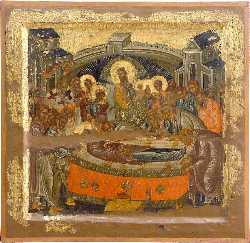
Memorial House of Hristo Uzunov
Museum
Memorial House of Hristo Uzunov
 Museum
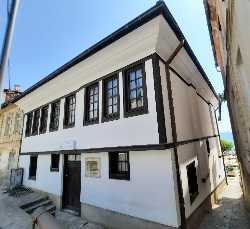
Memorial House of Grigor Prlichev
Museum
Memorial House of Grigor Prlichev
 Museum
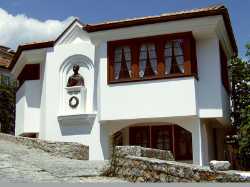
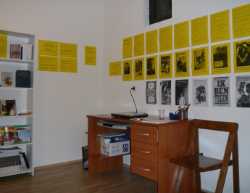
A. den Doolaard Museum
Museum
A. den Doolaard Museum
 Museum
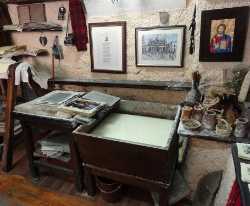
National Workshop for Handmade Paper
Museum
National Workshop for Handmade Paper
 Museum
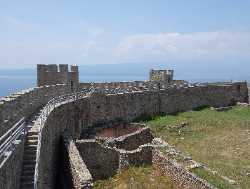
Samoil’s Fortress
Museum
Samoil’s Fortress
 Fortress
Church of Saint Sophia
Fortress
Church of Saint Sophia
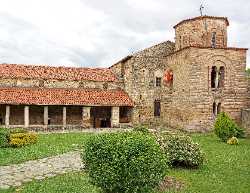 Church
 of Saint John the Theologian at Kaneo
Church
Church of Saint John the Theologian at Kaneo
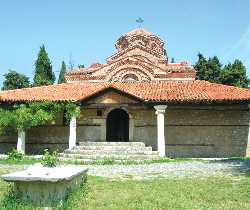
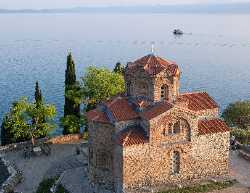 Church
 of the Virgin Mary Peribleptos
Church
Church of the Virgin Mary Peribleptos
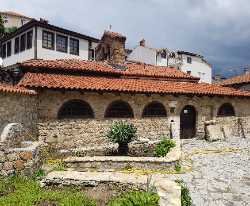
 Church
 of St. Nicholas Bolnički
Church
Church of St. Nicholas Bolnički
 Church
Ancient Theatre of Lychnidos
Church
Ancient Theatre of Lychnidos
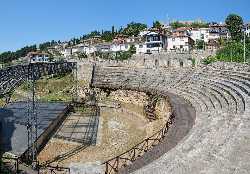 Theatre