Samoil’s Fortress
Samoil’s Fortress dominates Ohrid from its hilltop, a vast stone crown overlooking the lake and the old town. More than a defensive stronghold, it is a symbol of the First Bulgarian Empire under Tsar Samoil, who ruled from Ohrid in the late 10th century. The site carries layers of history: ancient fortifications lie beneath the medieval walls, showing that this strategic point has been used since classical times. Inside, visitors walk along restored ramparts that offer some of the most dramatic panoramas in the region. The scale of the walls—some reaching over 16 meters—reveals the ambition of Samoil’s reign. Archaeological zones within the fortress display foundations of earlier structures, including traces of Hellenistic fortifications that predate the medieval expansion. One of the most interesting facts is that the fortress was once part of a much larger urban complex, serving not only military purposes but also administrative and ceremonial ones. Excavations have uncovered pottery, tools, and coins that illustrate Ohrid’s role as a thriving medieval capital. Interpretive panels explain how the fortress connected to nearby churches and neighborhoods, forming a fortified city rather than a standalone citadel.
Ohrid North Macedonia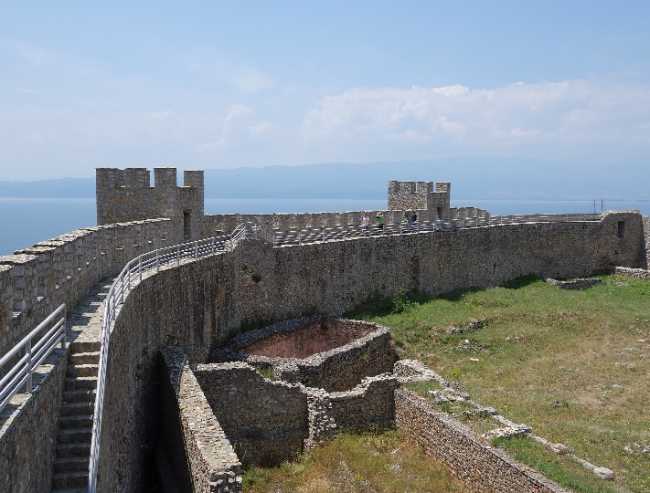
The fortress is located on the highest hill above the town, at Kuzman Kapidan 68, Ohrid 6000, North Macedonia. It is not hidden at all, you can see its big stone walls from almost anywhere around the lake, and you get to it by following the cobbled streets up from the bazaar. Once you are up there the view is incredible over the red roofs, Lake Ohrid and the mountains, but what makes it even better is that all the main sights are right around it. Just below the walls you have the Church of St. Clement and Panteleimon at Plaosnik, one of the most important spiritual places in Ohrid, and a little further down is the Ancient Theatre of Ohrid, where they still hold concerts in summer. Walking down towards the lake you pass the Robevi Family House, which is now the National Museum, and the beautiful Church of St. Sophia with its famous frescoes. On the other side of the hill, about ten minutes on foot, is the iconic Church of St. John at Kaneo, right on the cliff above the water. Everything in old Ohrid is close, so from the fortress you can easily keep exploring on foot without any transport.
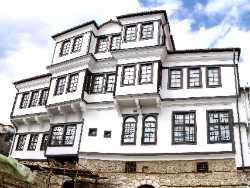 Museum
Icon Gallery of Ohrid
Museum
Icon Gallery of Ohrid
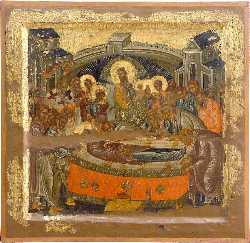 Museum
Memorial House of Hristo Uzunov
Museum
Memorial House of Hristo Uzunov
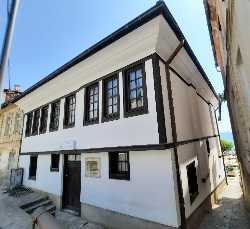 Museum
Memorial House of Grigor Prlichev
Museum
Memorial House of Grigor Prlichev
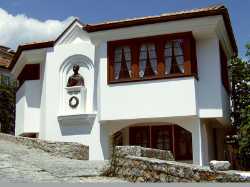 Museum
A. den Doolaard Museum
Museum
A. den Doolaard Museum
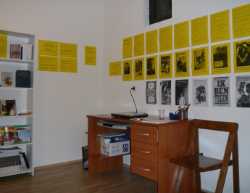 Museum
National Workshop for Handmade Paper
Museum
National Workshop for Handmade Paper
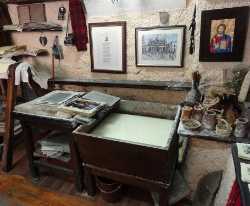 Museum
Church of Saint Sophia
Museum
Church of Saint Sophia
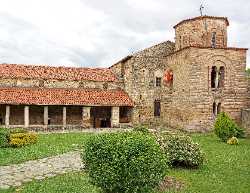 Church
 of Saint John the Theologian at Kaneo
Church
Church of Saint John the Theologian at Kaneo
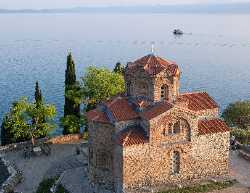 Church
 of Saints Clement and Panteleimon
Church
Church of Saints Clement and Panteleimon
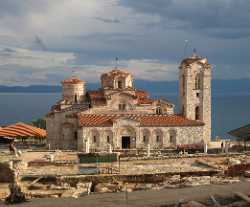 Church
 of the Virgin Mary Peribleptos
Church
Church of the Virgin Mary Peribleptos
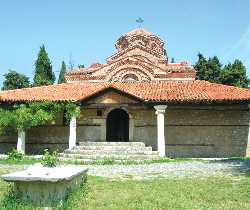 Church
 of St. Nicholas Bolnički
Church
Church of St. Nicholas Bolnički
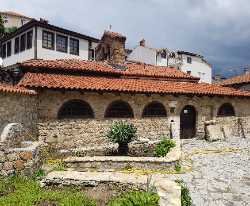 Church
Ancient Theatre of Lychnidos
Church
Ancient Theatre of Lychnidos
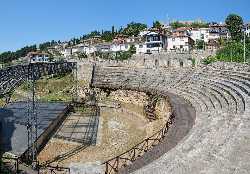 Theatre