Ancient Theatre of Lychnidos
Ancient Theatre of Lychnidos is one of Ohrid’s most atmospheric landmarks, a rare Hellenistic theatre still standing in its original urban setting. Built in the 2nd century BC, it once hosted dramatic performances and civic gatherings for the ancient city of Lychnidos. Its later history adds intrigue: during Roman times, the theatre was used for gladiatorial games and even early Christian persecutions, which led locals to bury it under debris after Christianity became dominant. What visitors see today is the result of a 20th‑century rediscovery, when houses built over the site were removed and the stone tiers emerged again. The surviving lower rows give a clear sense of the original layout, and the stage area still carries traces of ancient architectural elements. Standing in the orchestra, you can imagine how sound once carried through the semicircle, a feature that makes the theatre suitable for modern concerts and festivals. One of the most interesting facts is the presence of carved symbols linked to Dionysus, the god of theatre, confirming the site’s original cultural purpose. Nearby archaeological finds—pottery, coins, and decorative fragments—illustrate daily life in Lychnidos and its connections to wider trade routes.
Ohrid North Macedonia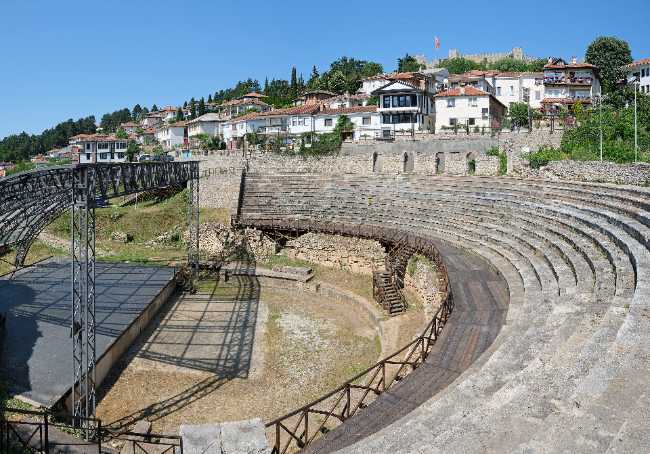
The Ancient Theatre of Lychnidos, also known as the Ancient Theatre of Ohrid, is located on the hill below Samoil's Fortress, at Ilindenska Street, Ohrid 6000, North Macedonia. It was built around 200 BC in the Hellenistic period and is the only theatre of that type in the country, tucked between two hills that give it perfect natural acoustics. Because it sits in the heart of the historic core, everything is around it. Directly above you have Samoil's Fortress with its walls and viewpoints, and just a few minutes walk away is the Church of Saints Clement and Panteleimon at Plaosnik, with the archaeological excavations. Going down the stone streets you come to the Church of the Virgin Mary Peribleptos and its Icon Gallery, the Church of Saint Sophia, the Robevi Family House Museum, and the National Workshop for Handmade Paper on Car Samoil street. If you keep walking toward the lake you will reach the Church of Saint John at Kaneo on its cliff above Kaneo Beach. The theatre is still used today for the Ohrid Summer Festival, so it is very much alive and surrounded by all the main sights.
 Museum
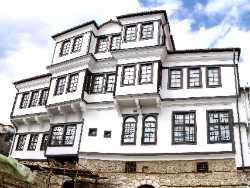
Icon Gallery of Ohrid
Museum
Icon Gallery of Ohrid
 Museum
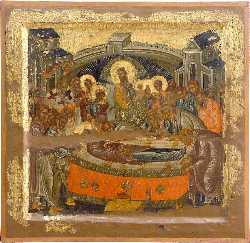
Memorial House of Hristo Uzunov
Museum
Memorial House of Hristo Uzunov
 Museum
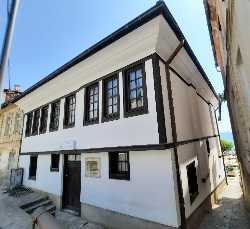
Memorial House of Grigor Prlichev
Museum
Memorial House of Grigor Prlichev
 Museum
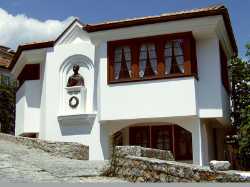
A. den Doolaard Museum
Museum
A. den Doolaard Museum
 Museum
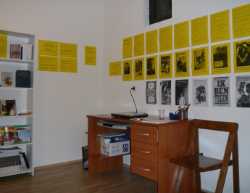
National Workshop for Handmade Paper
Museum
National Workshop for Handmade Paper
 Museum
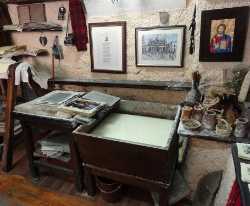
Samoil’s Fortress
Museum
Samoil’s Fortress
 Fortress
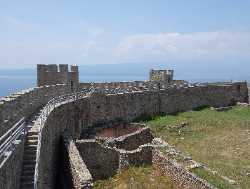
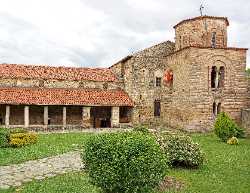
Church of Saint Sophia
Fortress
Church of Saint Sophia
 Church
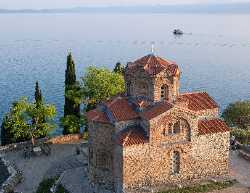
 of Saint John the Theologian at Kaneo
Church
Church of Saint John the Theologian at Kaneo
 Church
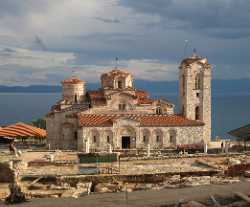
 of Saints Clement and Panteleimon
Church
Church of Saints Clement and Panteleimon
 Church
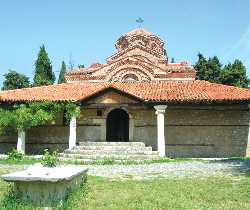
 of the Virgin Mary Peribleptos
Church
Church of the Virgin Mary Peribleptos
 Church
 of St. Nicholas Bolnički
Church
Church of St. Nicholas Bolnički
 Church